
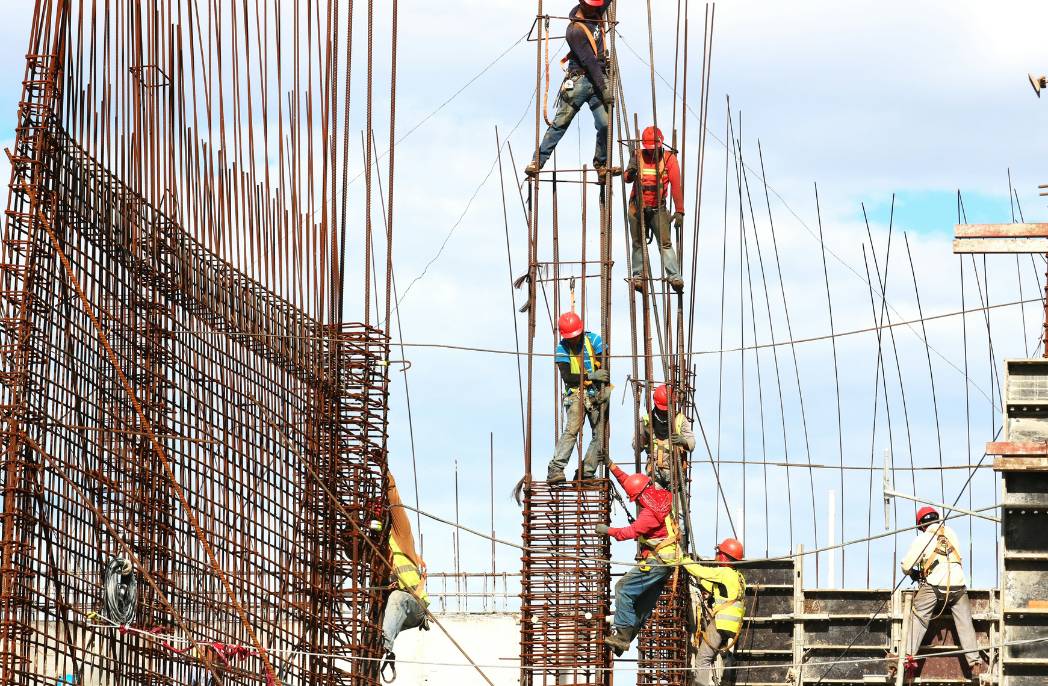
Building, construction and engineering expert Steve Abbott says the federal government’s plans to build 1.2 million homes in the next five years is likely to create a slew of building defects, as resources will wear thin while working overtime to meet ambitious and potentially unachievable targets.
Abbott – managing director and founder of construction advisory and delivery services company SJA – advises against running full speed ahead with the federal government’s forced construction boom.
He says the NSW Building Commissioner is still managing the fallout of construction defects that resulted from the previous residential boom, in addition to other complications such as housing and skills shortages, supply chain issues and concerningly low apprenticeship completion rates.
Symptoms of poor and thoughtless construction
Abbott regularly testifies as a court expert across quantum, forensic delay and disruption analysis in the supreme courts of New South Wales, Queensland and Victoria. He constantly comes across issues such as water leaks, cracks and poor finishes in the court review process – defects he attributes to “poor construction”.
“If we don’t prioritise quality in this next wave of residential construction, the Commissioner will have to address a new swathe of defects over the next 20 years,” says Abbott.
Abandoning the ‘race to the bottom’ mentality
Abbott says the glaring run-on problem from the federal government’s forced construction boom is dwindling resources.
“Governments are trying to force the industry into a residential boom without the resources to manage such a workload,” he says. “The industry needs a reliable supply of high-quality skills, staffing, a sufficient number of planners and building certifiers, a reliable talent pipeline, and building materials.”
Abbott says areas of attention for state governments include more rigorous inspections and certifications, alongside skilled and experienced people conducting this service.
He says the construction industry is also hindered by the proclivity to pursue the cheapest and quickest route and cut corners to save on expenses – exemplified by the federal government’s push to build 1.2 million homes across the next five years. “There is a constant drive to do things cheaper in construction – it’s a race to the bottom. We need to get back to basics and do things right.”
Abbott says although short-term remedies such as financial aid to incentivise people to study an apprenticeship are successful, the industry requires “overarching and enduring” solutions.
The hazards of band-aid solutions after the fact
Abbott is critical of the federal government’s belated band-aid solution to defects to implement compulsory insurance.
“While this might solve part of the problem, it is dealing with the issue after the horse has bolted,” he says. “We need to get better at constructing quality dwellings rather than finding better ways of dealing with defects after they occur.”
Abbott says the willingness of the government to employ compulsory insurance to combat the impact of defects necessitates a larger discussion on construction quality, adequate resourcing and bolstering the efforts of people involved in the industry. “At the heart of the construction industry are its people – their skills, experience, continuous ongoing training and commitment.”
A talent pipeline may assist in overcoming snowballing defect issues
He labels the re-introduction of university fees in the late 1980s as contributing to a “user-pays system” that forces apprentices to invest precious financial and personal resources into an industry that has skewed priorities.
“Why are we putting the onus on them to take a huge bet on what jobs and skills will be in demand in the future?” says Abbott.
He maintains the development of a talent pipeline to better equip the construction industry begins with the federal and state governments realigning aspirations away from another possibly ill-fated construction boom.
“Federal and state government policy should pave the way for better resourcing, better controls in inspections and certifications and high-quality accessible training,” he concludes.
Urban planners maintain housing crisis discussions would be remiss to ignore regional areas


