

It’s been nearly two decades since the Reconciliation Action Plan (RAP) was introduced by Reconciliation Australia. The national framework was designed to help organisations take definitive and, more importantly, measurable steps toward reconciliation with Aboriginal and Torres Strait Islander peoples.
Since then, thousands of organisations – spanning banking, education, sports, facilities management and healthcare, among others – have spent the past few decades drafting their plans to meet the tiered goals of the framework.
Among those who have played a pivotal role in helping draft policymaking at senior levels is Aaron Clark, a Djap Whurrung, Kirrae Whurrung, Peek Whurrung man born and raised in the southwest Victoria community of Framlingham.
Clark’s lived experiences during his formative years growing up in his discrete Aboriginal community is also where he was first exposed to the building services industry. He says that he and his community were very much involved in designing and implementing the usability of the space across infrastructure developed over the years including their local healthcare and tourism centres.
“That was where I first dealt with engineers, architects and builders. We had a lot of dialogue about: how do you make a culturally safe building? How do you ensure that Aboriginal people get an opportunity for a job on that work site?,” explains Clark.
But it wasn’t in the building services industry that Clark started out his professional career nearly three decades ago. Instead, it was in an avenue in which several Indigenous men have found success – sports and specifically the AFL. Clark wasn’t competing on the field, but instead in the boardrooms of some of the sport’s biggest decision-makers.
By 2015, Clark had risen to become the director of the Korin Gamadji Institute (KGI) at the Richmond Football Club, making him the only Indigenous senior executive out of the 18 clubs at the time. The KGI is a centre of excellence for Indigenous youth, supporting them in leadership careers, and health and wellbeing. One of Clark’s
mandates was to lead the Institute and the club through its RAP program. When it is executed correctly, organisations rise through the tiered system of the program from Reflect, Innovate and Stretch through to Elevate. Clark’s role was to walk the organisation through the Elevate level.
“We were the only sporting club at the time, out of around 4000 organisations, of which 20 had reached the Elevate status where we have actions around creating cultural competency and safety, and also building partnerships. I was able to share my knowledge of embedding the ways of Aboriginals knowing, being and doing into everyday business and high performance,” says Clark.
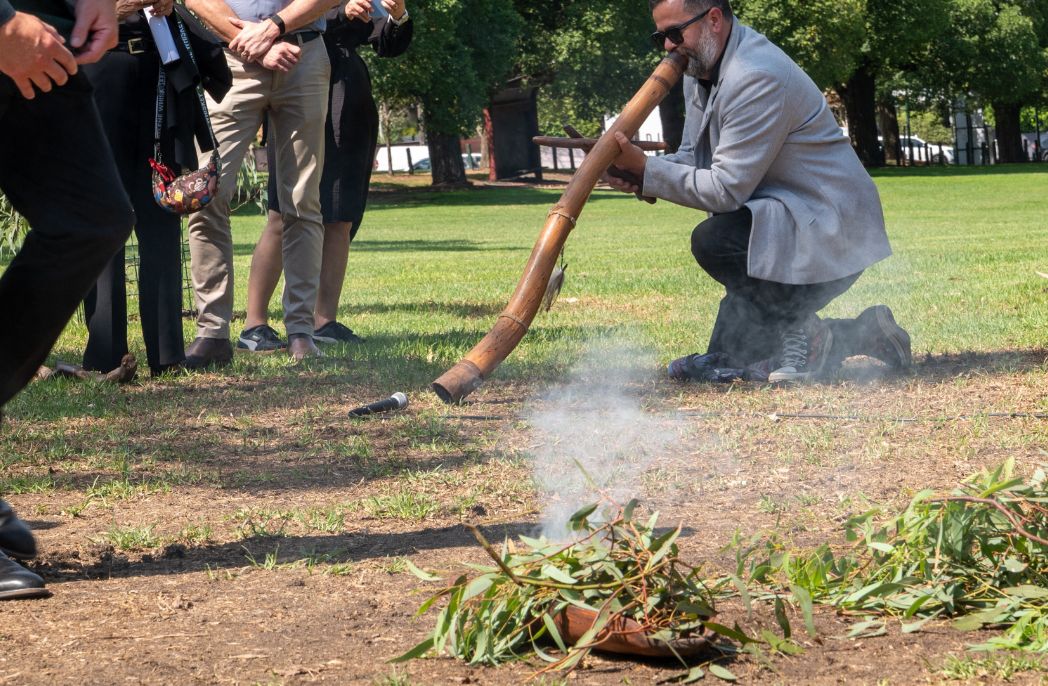
At around this time, Clark came into contact with Russell Telford, the managing director at the A.G. Coombs Group. The Melbourne-headquartered building services company designs, installs, commissions and maintains mechanical, fire protection, HVAC, and electrical and hydraulic systems. He was keen to support the programs Clark was rolling out at KGI. At the time, Telford also invited Clark to contribute to the development of A.G. Coombs’ RAP.
A decade later, Clark made the jump over to join A.G. Coombs full-time where he is now the executive lead for Inclusion and Engagement at the company, which recently celebrated its 80th anniversary. He was brought on board to build the company’s first diversity and inclusion action plan, which has three key pillars – advancement of women, people of all abilities and Indigenous pathways. He’s gone a step further.
He has now co-founded a capability partnership with A.G. Coombs, Murrungar – which means to build, grow and nurture – which serves as an Indigenous-led procurement company for commercial, government and infrastructure projects.
“It’s the melding of two communities – A.G. Coombs’ community, which is 80 years old, and our community which is 60,000-plus years old.”
Murrungar is clear about its economic positioning, stating unambiguously that it is a profit-for-purpose enterprise and majority Indigenous owned. It isn’t a dressed up social-first, profit later entity. Clark is adamant that economic wins for Murrungar and the Indigenous businesses it supports are central to its operations, not an afterthought.
“I want to ensure that, under the Murrungar way, Aboriginal people can participate in the economy across the whole supply chain in a really meaningful and authentic manner.
“There’s a growing Indigenous and diverse economy of Aboriginal facilities around the health sector, the mining sector and other remote services. Aboriginal people with Aboriginal dollars are asking the question, ‘Where are our dollars being spent?’. And I think clients are also asking that. They want to understand what’s the impact of where this contract’s going. Organisations have to be better at articulating what is the legacy and local impact of those dollars. Murrungar wants to be a part of that solution.”
Murrungar has set itself a target of ensuring that 20 percent of its supply chain in the first three years will be from Indigenous suppliers. It will also work closely with Indigenous suppliers to help them understand the expectations of the open market, acting as a conduit between the end client and the Indigenous supplier down to getting business basics in place such as scheduling of invoices or negotiating the rates and terms for a supply agreement.
Murrungar is also committed to supporting the creation of skilled technical personnel. It aims to have 50 Indigenous people trained in technical roles for the building services industry – such as engineers, mechanical plumbers and electrical technicians – by 2030.
It is also working with the Aboriginal community to deeply embed them across the supply chain from ordering, to supplying, to employing them in the workshop, and through to fitting the final products.
Clark will be working with end clients as a consultant to help them understand the impact that their projects will
have on Country through the materials used, the facility’s recycling systems, the groundworks, and even the water
and energy usage mechanisms. These are all areas in which Aboriginal people have expertise and knowledge when it comes to the impact on the environment.
“We’ve been managing and supporting Country for thousands of years. Murrungar is the vehicle to drive those conversations, to really push an innovative approach and think about how you can turn procurement into everyday outcomes and impact.
“And we’re not asking facility managers to do anything different. It’s to utilise the dollars you’re already spending now, but maybe unpack and reevaluate it.”
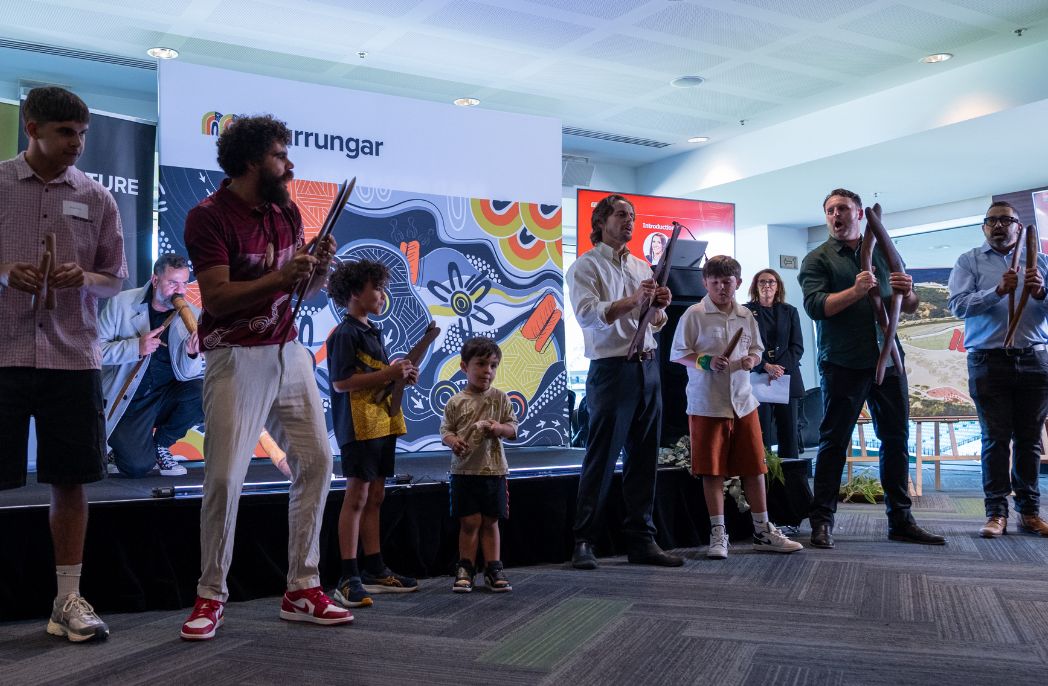
To emphasise the point that Murrungar isn’t just another tool geared towards performing a perfunctory service for the Aboriginal community and that businesses working with the organisation will see far-reaching consequences of their actual dollars, Clark points to the ‘Supply Nation 2025: The Sleeping Giant Rises’ report which says that for every $1 spent with an Indigenous business, it is estimated that it has a $3.66 return on social impact.
That social impact could have a compounding beneficial effect across housing, healthcare and the workforce. For many Aboriginal families, it could be the first time that someone from their family has been offered a full-time job. For others, it may be the first time they are able to buy their own home.
“When we’re employing 20 Aboriginal staff and have a vision to employ over 50 Aboriginal staff in Murrungar, think of the capacity they’re contributing. They’re paying taxes, they’re contributing to their household and they’re sending their kids to school.
“We’re using economic investment, empowering Aboriginal people to control their own destiny, empowering Aboriginal people to be business owners.”
Referencing this year’s World FM Day’s theme ‘Cultivating Belonging Through Built Environments’, Clark says that Indigenous people from other countries beyond Australia too have a role to play in the built environment.
“There are diverse people beyond the Indigenous population that are experts at putting community at the heart of everything they do, because that’s naturally who they are as Indigenous peoples, no matter what country they’re from.
“Indigenous peoples are a collective, nurturing and inclusive society. If you can harness those three elements and put them into your building space, how amazing is that? You’re seeing feng shui, you’re seeing Indigenous artwork now providing a richness to reflect Australia’s modern day society. And that to me then fosters a sense of belonging because you can see yourself embedded there.”
But he equally cautions that those promoting the message of creating belonging in the built environment must also first understand what that entails and what they’re asking for from stakeholders. “When we talk about cultivating a sense of belonging, I think you’ve got to be really clear. What are you wanting people to belong to? And often the built environment can struggle with an identity because Australia struggles with their identity.”
He says that belonging takes on a new meaning in the built environment when it is anchored in Country, whether that’s through artworks, installations or pathways. “The end opportunity is through Aboriginal people having a role in land and Country, in environmental sustainability, supply chain that’s manufactured from Country or on Country, and through opportunities of technical roles.”
He also dispels some of the misguided notions that Aboriginal organisations often get that they are getting unfairly prioritised or that they are receiving special handouts. “Aboriginal organisations aren’t after a handout; we’re after a hand-up. Economic participation means Aboriginal people controlling our own destiny, having equity and having a level playing field. Now, that requires those who are currently setting the rules and the boundaries to adjust and tweak. And it requires leadership like A.G. Coombs to lean in and walk that journey side-by-side.”
This article first appeared in the May 2026 edition of FM magazine. To download the entire edition for free, click here.
Images: Supplied
Read more: Quayclean and Multhana collaboration facilitates employment opportunities for First Peoples
