
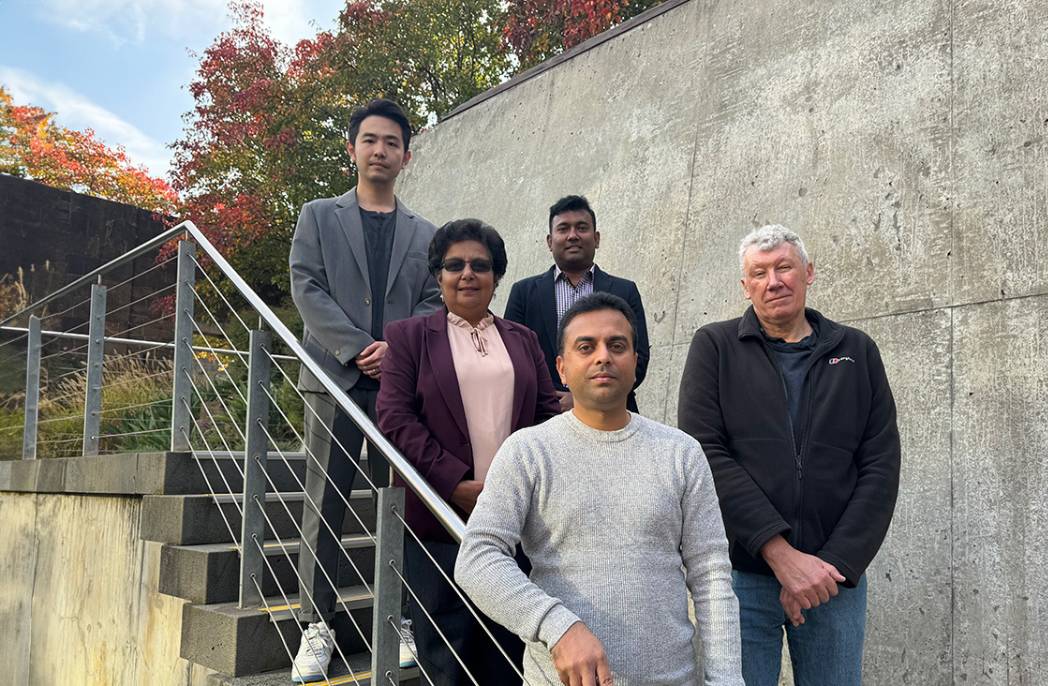
RMIT University has developed low-carbon and durable concrete that not only recycles double the amount of coal ash in comparison to current standards, it halves the amount of cement required.
The innovative discoveries by engineers at RMIT University have the potential to minimise the effects of a damaging coal-drenched Australia. More than 1.2 billion tonnes of coal ash were produced by coal-fired power plants in 2022 – making coal ash account for a fifth of all waste produced.
Additionally, the ongoing demand for concrete presents society with another conundrum – cement is a key ingredient of concrete, yet cement production contributes to eight percent of global carbon emissions.
In light of these major hurdles to a clean energy future, RMIT engineers have collaborated with AGL’s Loy Yang Power Station and the Ash Development Association of Australia to substitute 80 percent of the cement in concrete with coal fly ash.
New frontiers in low-carbon concrete uses
RMIT project lead Dr Chamila Gunasekara says this discovery deepens current understandings of low-carbon concrete. “Our addition of nano additives to modify the concrete’s chemistry allows more fly ash to be added without compromising engineering performance,” says Gunasekara.
The team’s methodology can be used to harvest and repurpose underutilised ‘pond ash’ from coal slurry storage ponds at power plants. The engineers manufactured large concrete beam prototypes with fly ash and pond ash that adhere to Australian engineering performance and environmental standards.
Offsetting ash wastes into useful and sustainable avenues
Gunasekara is excited by the prospects of these discoveries as they suggest alternatives to cement development and capitalise on the underexploited and occasionally hazardous pond ash.
“It’s exciting that preliminary results show similar performance with lower-grade pond ash, potentially opening a whole new hugely underutilised resource for cement replacement,” he says. “There are hundreds of megatonnes of ash wastes sitting in dams around Australia, and much more globally.”
Gunasekara says ash ponds carry an environmental hazard risk, therefore the chance to give such ash waste a new life in construction materials is an unmissable opportunity.
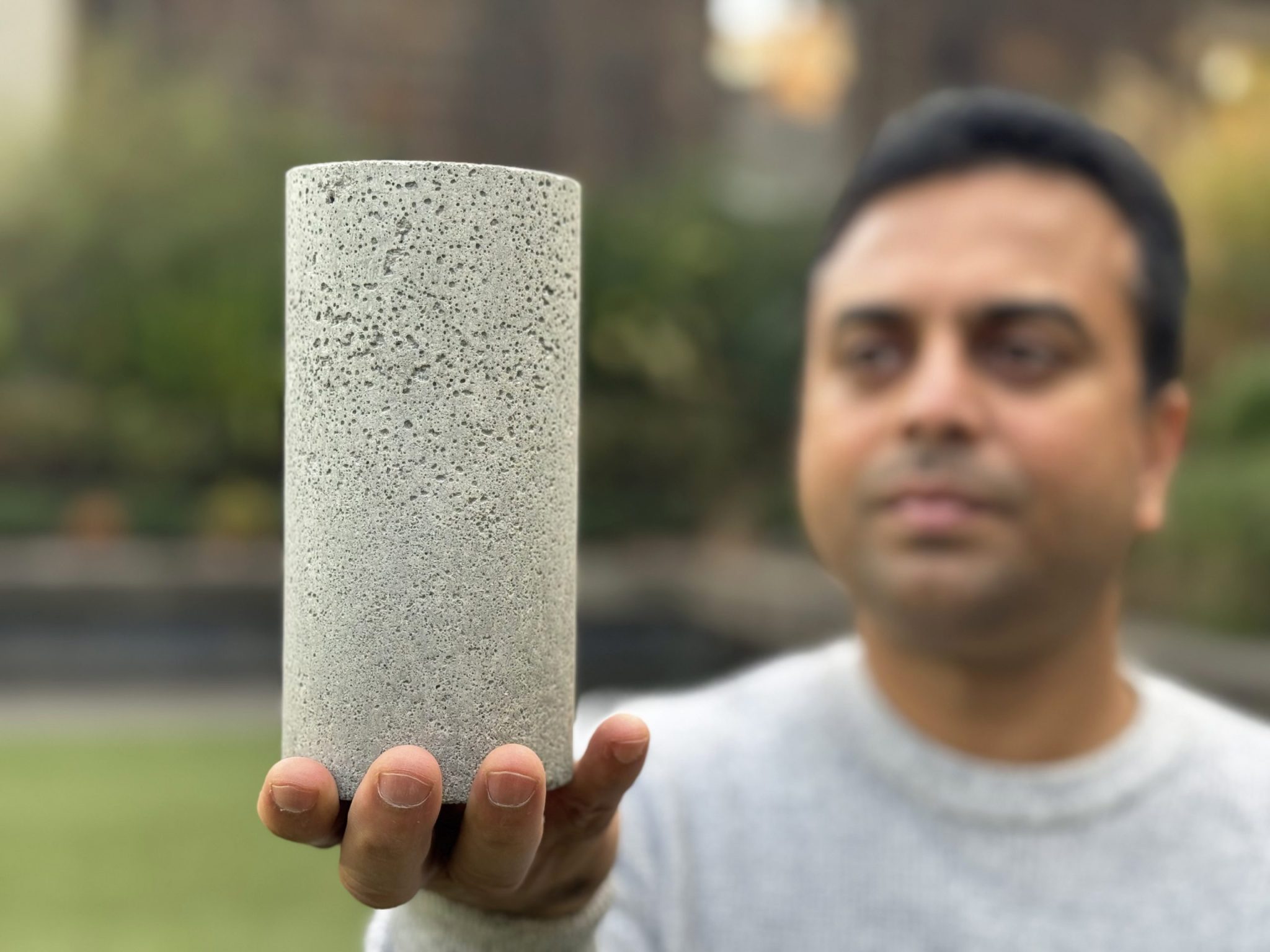
Dr Chamila Gunasekara with a sample of the low-carbon concrete.
Infrastructure and design assisted by digital simulation
Although the recycling capabilities of such low-carbon concrete is a discovery worthy of celebration, the teams were eager to measure the ongoing resilience and durability of the concrete. A pilot computer modelling program developed by RMIT and Hokkaido University’s Dr Yogarajah Elakneswaran embraced the challenge.
Dr Yuguo Yu, a specialist in virtual computational mechanics at RMIT, says the team relied on a physics-based model to evaluate how the low-carbon concrete will perform over time. “This model offers us opportunities to reverse engineer and optimise mixes from numerical insights,” says Yu.
Gunasekara praises the ingenuity of this model as it allows the team to observe how the quick-setting nano additives mitigate the large amounts of slower-setting fly ash and pond ash, subsequently enhancing the concrete’s performance.
“The inclusion of ultra-fine nano additives significantly enhances the material by increasing density and compactness,” says Gunasekara.
The modelling championed by the RMIT and Hokkaido University teams posits a future wherein design and construction can be assisted by digital simulation. The teams comment that local councils and communities would be wise to reach for this low-carbon concrete as a sustainable construction material alternative.
Lead Image: From left to right – Dr Yuguo Yu, Professor Sujeeva Setunge, Dr Dilan Robert, Dr Chamila Gunasekara and Dr David Law.
Photography by Micheal Quin.
Foodifox leads the charge of a new frontier in dining experiences at educational facilities.


