

When attending a concert at a theatre, moseying around an art gallery or museum, strolling past your local community centre or experiencing child-like wonder at the zoo, have you ever stopped to ponder who is in charge of the management and operations of this bustling and beloved facility?
In ‘Meet Your Local FM’, we talk with the facility and operation managers, technical service and safety operators, and sustainability officers of iconic Australian institutions.
We’re diving deep to reveal a facility’s inner mechanics, along with the who and what it takes to keep these special spaces running so smoothly. We’re putting a face to a facility and debunking any assumptions surrounding this essential profession which many don’t know a lot about.
When Government House Queensland took the plunge and adopted swipe cards as a form of access and control management, the heritage application was 80 pages long.
“Being a heritage-listed building, it’s not as simple as repainting a wall or fixing the tiles, it requires input from heritage experts and heritage exemptions,” says acting facilities manager and sole Sergeant-at-Arms of Government House Queensland, Ty Beale.
He says the reality of such a simple fixture demanding a nearly 100-page heritage application illustrates the unpredictable and complex task of conducting maintenance on heritage-listed buildings.
However, the wonder of working at a heritage-listed facility and estate compensates for an eye-wateringly hefty amount of paperwork for Beale, alongside being privy to the precarity and sacredness of history – a privilege not lost on staff.
“Once history is gone, it is gone,” says Beale. ”We’re all focused on maintaining the importance of the history of Government House.”
Invaluable heritage fabric and heritage-listed bushlands, valiant efforts to nurture surrounding biodiversity, event management prowess and identity as a haven for Queenslanders scattered far and wide – these attributes make Government House a compelling case study in the possibilities of harnessing the skillset of a interdisciplinary team in facilities management.
A masterclass in operating a multi-purpose community facility
In addition to public engagement experience, supporting the governor to maximise the full influence of their community presence, has been a major perk of Beale’s 17-year-long tenure as the Sergeant-at-Arms – he has only been acting facilities operations manager for the last year.
“It’s the people,” he confirms. “I love being out there. When people come, the joy they get, especially from the Christmas lights, the kids just absolutely love it – I’ll be able to bring my kids and my grandkids here and say: I’m responsible for that.”
Government House Queensland is an exemplar in a multi-purpose facility capitalising on every moving part to operate an efficiently managed space that gives back to the community and repays the planet.
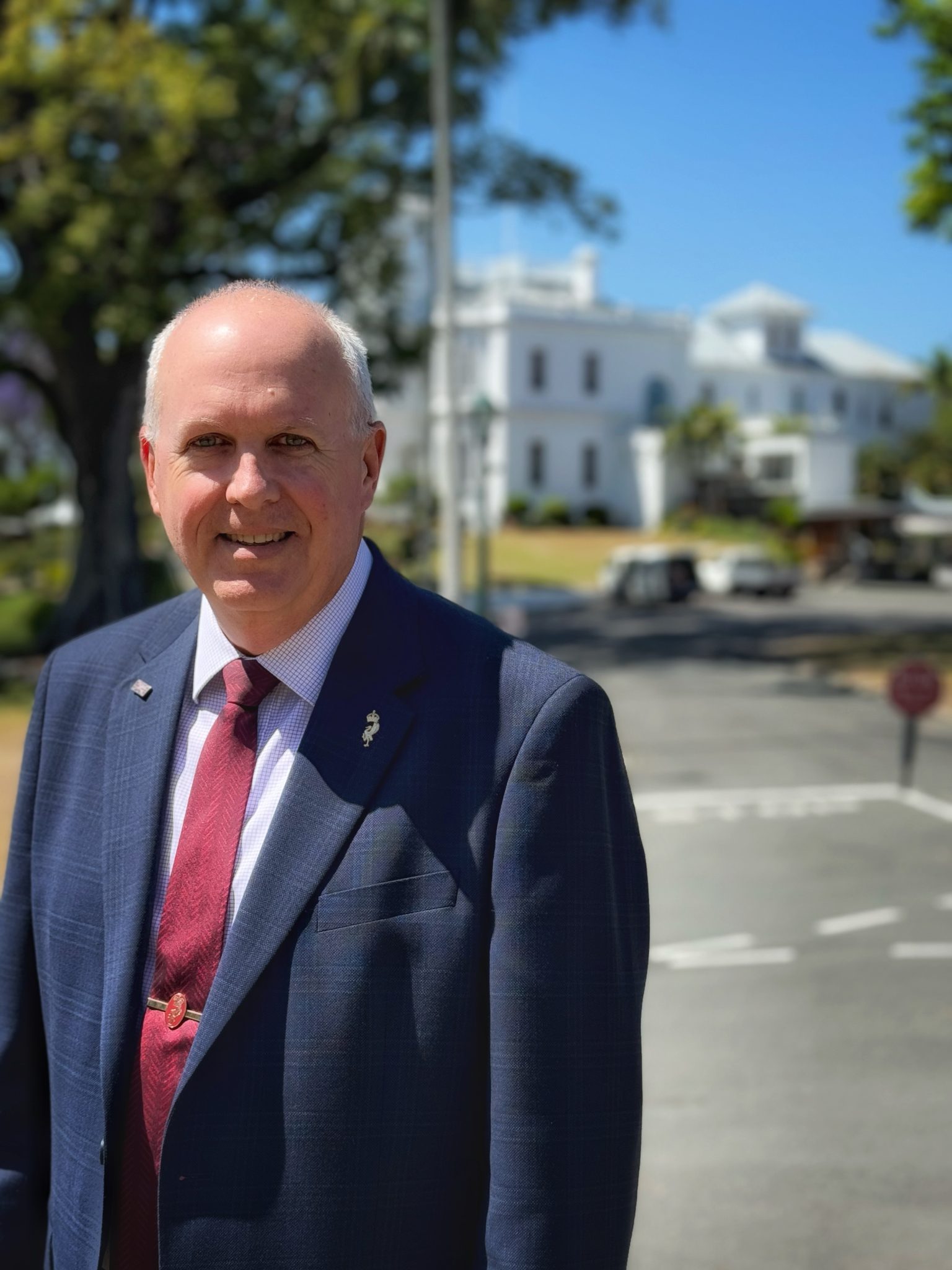
Supporting the governor to maximise the full influence of their community presence has been a major perk of Beale’s 17-year-long tenure as the Sergeant-at-Arms.
Managing time-sensitive pressures and expectations of government officials
Although Beale recently celebrated 17 years working as a Sergeant-at-Arms at Government House, he started his career as a mechanic in his home city of Darwin.
Fuelled by a desire to foray into public service, he worked for the Australian Federal Police across a range of areas and had a final post as one of two officers for security management in the Prime Minister’s office. This role primarily covered office security, maintenance and organising guest reception and state visits.
Following a move from Canberra to Brisbane, Beale spotted a job for a Sergeant-at-Arms at Government House. “It was similar to what I was doing in the Prime Minister’s office and I thought, ‘I’ll give it a go’,” he remembers.
“Managing contractors with time-sensitive pressures and the expectations of the Prime Minister’s office [stood] me in good stead to be suitable for this job. That was 2007, and I’m still here.”
Beale is thrilled to serve Queensland’s current Governor, Her Excellency the Honourable Dr Jeannette Young AC PSM. Her Excellency was sworn into the role on 1 November 2021 and is best known for performing the role of Queensland’s State Health Incident Controller during the COVID-19 pandemic.
A house for all Queenslanders
Located in the Brisbane suburb of Paddington, the 14-hectare Government House site was affectionately dubbed Fernberg House by the original owner of the property, German wine merchant Johann Christian Heussler.
Huessler purchased a portion of bushland hill-top lot in 1860 and after completing construction in 1865, named the house ‘Fernberg’, translating to ‘distant mountain’ in German.
Huessler unfortunately had to relinquish ownership of the site in 1872 due to bankruptcy. MP John Stevenson purchased the house in 1884 and facilitated numerous additions to the property that almost doubled it in size.
Fernberg almost fortuitously became Queensland’s Government House – following the establishment of The University of Queensland in 1909, the Government decided Government House at Gardens Point would transform into the university’s central hub. In 1910, Fernberg was leased as a temporary government house, however, in 1937, plans to construct a new house were abandoned, and Fernberg went through numerous renovations to eventually become what it is today.
Beale says every governor since 1910 has lived on site. “They still maintain other houses but they live here as part of the job, and all upstairs is their house and downstairs is our house,” he says.
The estate has four residences allocated to staff. Beale surmises that this is reminiscent of an era when staff were required to be on site for immediate responsiveness. On-site staff include a chef, driver, facilities manager, and a Sergeant-at-Arms.
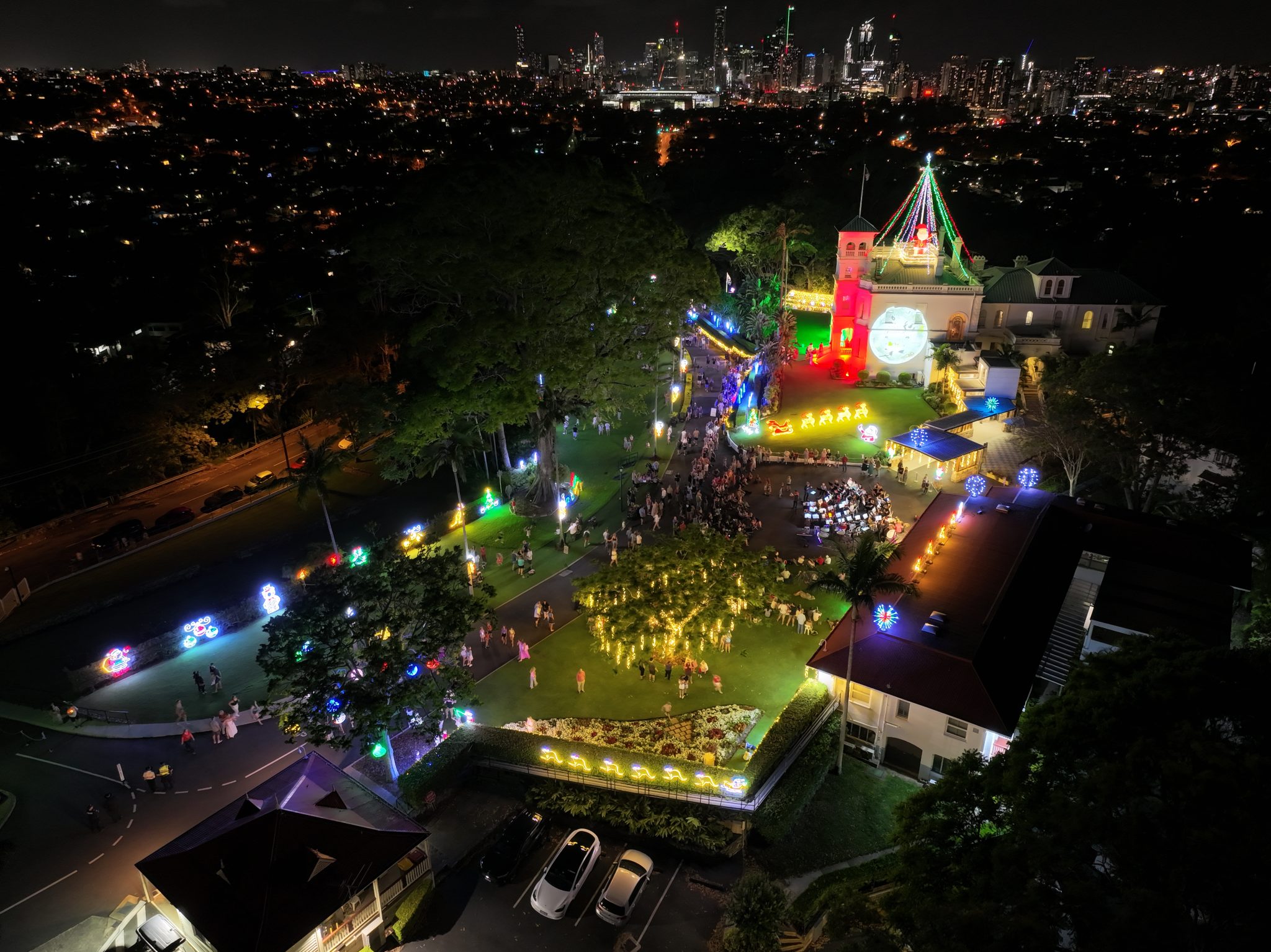
Beale takes up the helm of a bustling ecosystem of staff devoted to maintaining security, and the smooth operation and pristine presentation of the house.
While the Governor is away…
The Governor’s timetable usurps all maintenance tasks. Beale says an event such as a Premier visiting means the drawing room does not get painted, even if the schedule demands it. Works are often suspended, therefore the house looks for contractors willing to raincheck.
“The Governor’s program comes first. It’s critical that we manage our program around that and schedule our works as best we can, and have contractors that are understanding,” he says.
“If the Governor is on site, it’s event focused, so we’ll be supporting events as well as doing maintenance that is urgent or can be facilitated without impacting on the program.” However, Beale reveals that when the Governor is off site, the frequency of maintenance work skyrockets – the team will not let upkeep go astray.
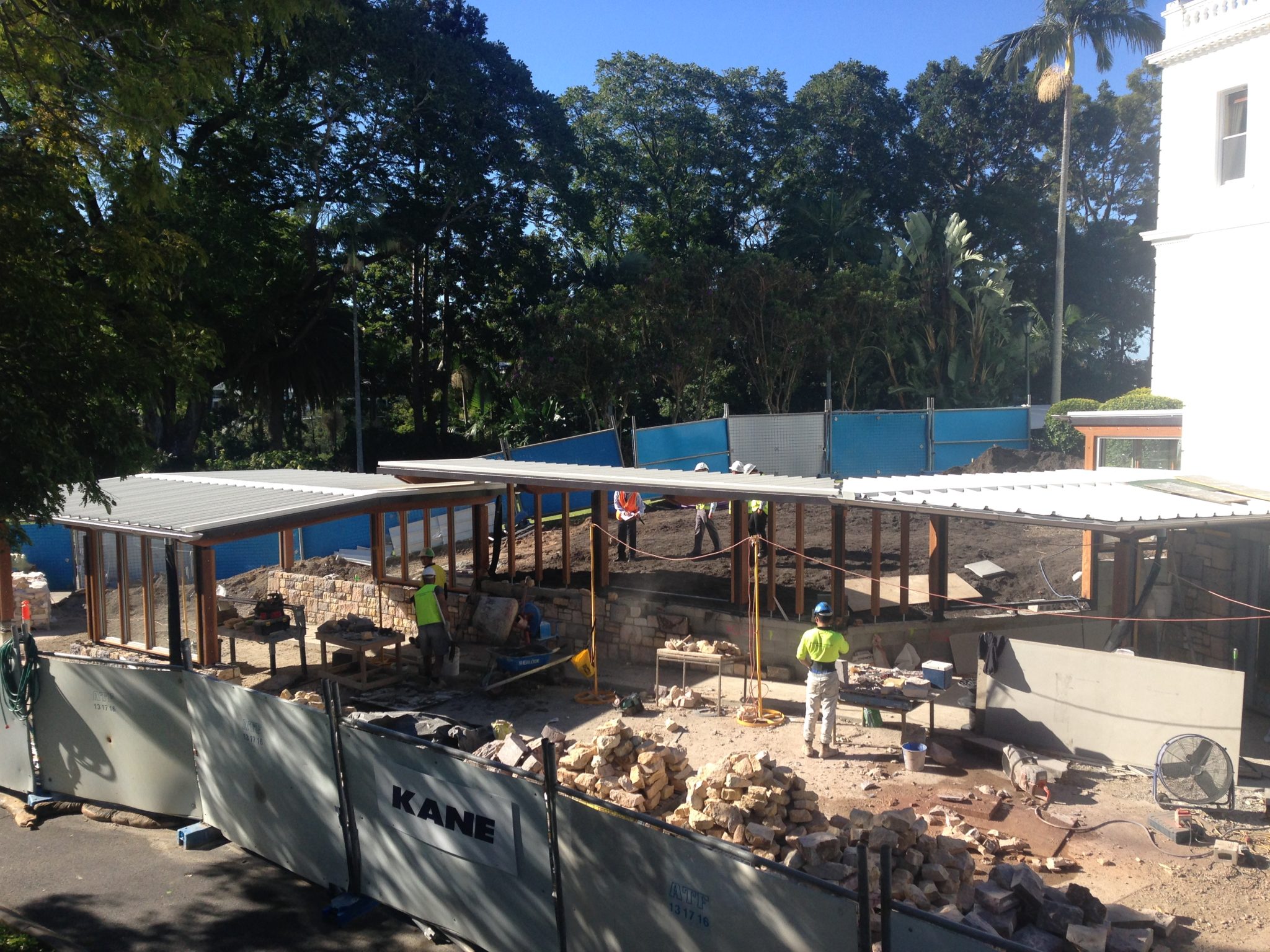
One of the biggest priorities for Beale and the team during busy event periods is lawn maintenance.
An ecosystem of staff
The house operates on a structured hierarchy evocative of the military. As the Sergeant-at-Arms, Beale is the designated second in command (2IC) to the facilities manager.
“Sergeant-in-Arms and facilities work hand in glove, but really I pick up the day-to-day stuff,” he says. “We’re very structured.”
Beale oversees events, on-site maintenance and security, whereas his counterpart covers strategy. He takes up the helm of a bustling ecosystem of staff devoted to maintaining security, and the smooth operation and pristine presentation of the house.
“We have 18 security staff over a 24-hour roster,” he says.
There are many star players on site – notably a resident horticulturist as a head gardener.
“We have a team of seven gardeners and two contractors,” says Beale. The house also boasts a painter, carpenter and Beale functions as an on-site IT specialist to manage projects, deliver support and facilitate initiatives to enhance service delivery.
Beale’s external collaborators include Queensland Police Service (QPS), the Department of Premier and Cabinet (DPC), the Department of Housing, local government, and Planning and Public Works – the official owner of Government House.
BMS at heritage-listed buildings akin to squeezing triangle in a circle
Remote-controlled processes are readily embraced at numerous public facilities, however, such processes are not essential for Beale to implement as the house has 24-hour security, automatic irrigation systems and a speedy generator to solve electrical faults.
However, the house is unable to completely lap up contemporary technological innovations – particularly building management systems (BMS) – due to the heritage fabric of the building and subsequent cost complications.
“Building management systems are obviously something we’d love to have, but unfortunately it’s sort of a cost-versus-reward case, and trying to actually achieve it in a 150-odd-year-old house,” says Beale.
He applauds the Sydney Opera House’s skilful implementation of BMS as such procedures demonstrate how such processes can be harnessed to enrich user experience.
“They have a BMS that has oxygen sensors in lifts and foyers,” says Beale. “It detects the amount of people from the oxygen levels and then turns the air conditioning up or down, or it detects faults in air-conditioning handlers hours before people would actually feel the room getting warm or too cold.”
Projects of this nature are time-consuming, yet a welcome challenge at the house. Beale reports that air conditioning was only installed in the house over the last 15 years. Additionally, the installation of equitable access lifts was a 10 year process. Working with heritage fabric demands attentiveness and a generous helping of compromise and patience. Inserting contemporary accessibility and safety standards into 100-year-plus buildings can be akin to squeezing a triangle into a circle.
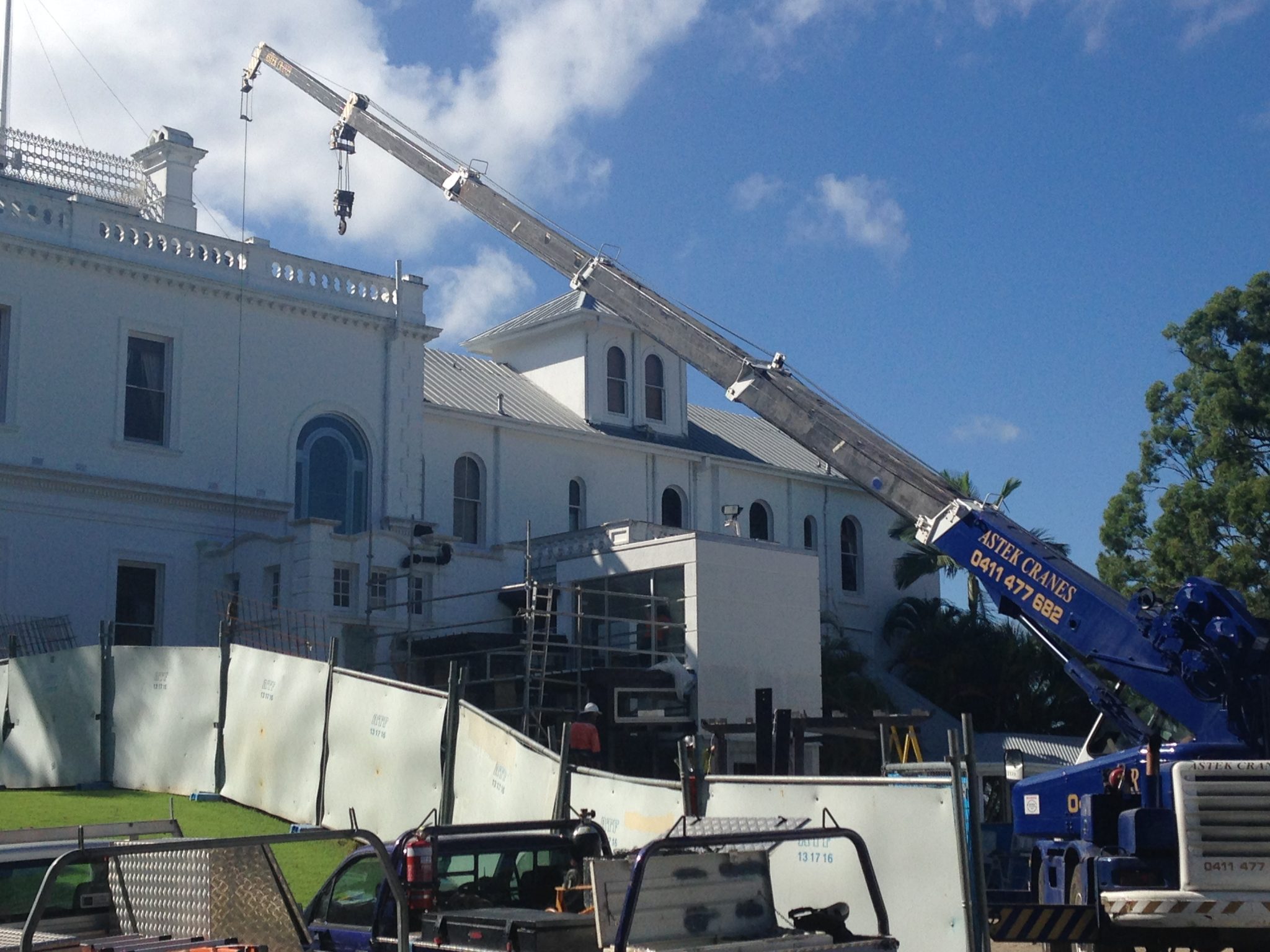
Working with heritage fabric demands attentiveness and a generous helping of compromise and patience.
The joys of lawn maintenance and event management prowess
The Queensland Governor could claim the coveted title of one of the most social people ever featured on Facility Management, and Government House may come out on top as the busiest facility. “I think this last financial year, there were 190 receptions and afternoon teas at Government House,” says Beale.
In the Governor’s first year, she had nearly 900 events – mostly off site and regional. “It’s a combination of receptions, dinners, afternoon teas and ambassador visits and tour groups,” says Beale.
He says the house’s investiture ceremonies – the awarding of Australian Honours and Awards to Queenslanders who have excelled in science, community welfare, sport, business, frontline services and the arts – are the most prestigious week in the Governor’s yearly calendar.
“Everything is focused on presenting ourselves in the best possible light during our investiture week,” says Beale.
One of the biggest priorities for Beale and the team during busy event periods is lawn maintenance. “Maintaining the lawn and trying to find the right time to renovate and allow the lawns time to fully recover is a challenge,” he says.
The rapid succession of events means the lawns are often unable to regenerate. “We get stuck in this cycle where we’re just mowing them and we’re not really letting them grow and develop,” says Beale.
The house’s grounds are currently undergoing the spring renovation – a cumbersome yet necessary task. “We aerate all the lawns, we scarify them and top dress them. They’re brown for a couple of weeks but that’s why they look so good all year round,” he says.
Beale underscores the gravitas lawn maintenance has at Government House. The team works tirelessly to maintain the pristine condition of the surrounding bushland – which is some of the oldest remnant bush sites in Brisbane. “We really strive to keep it like that,” says Beale.
Like a duck skimming on water
Government House is alive with constant mirth and merriment from the Christmas program, Sunday picnics and bush walks. Beale emphasises the value of open and ongoing communication to ensuring the successful delivery of events.
“We need to make sure that we’re all aware of what’s going on,” he says. “We’ve got to make sure we get the right equipment, personnel and resources in place for the events.”
The high frequency of events is an organisational feat that requires front-of-house composure and grace. Behind the scenes, it’s a commotion and a cacophony of open communication. “We’re like a duck on the water,” he says. “Underneath the surface our feet are going flat out.”
A culture of proactiveness and responsiveness
Beale collaborates with internal teams such as hospitality, programs and functions, yet also maintains regular communication with QPS and DPC. As the Sergeant-at-Arms he is the first point of contact for any guest of honour, whether it be King Charles or the CEO of Health and Wellbeing in Queensland.
Beale encounters people who assume a Sergeant-at-Arms is reserved for Parliament, however his presence at the house fulfils a long ceremonial ritual.
“I’m the only Sergeant-at-Arms at any of the government houses,” he says. ‘It’s something that we’ve had for 50 or 60 years and we’re keen to keep that tradition.”
Beale is well accustomed to people assuming facilities managers are caretakers and handymen. Although he still participates in traditional maintenance work, he emphasises the need to have a tight grasp on future-proofing and strategy.
“We have a conservation plan for the house and a conservation plan for the gardens,” he says. “We have a Bush land management plan, so all these different documents and plans are in place to drive maintenance and renovations.”
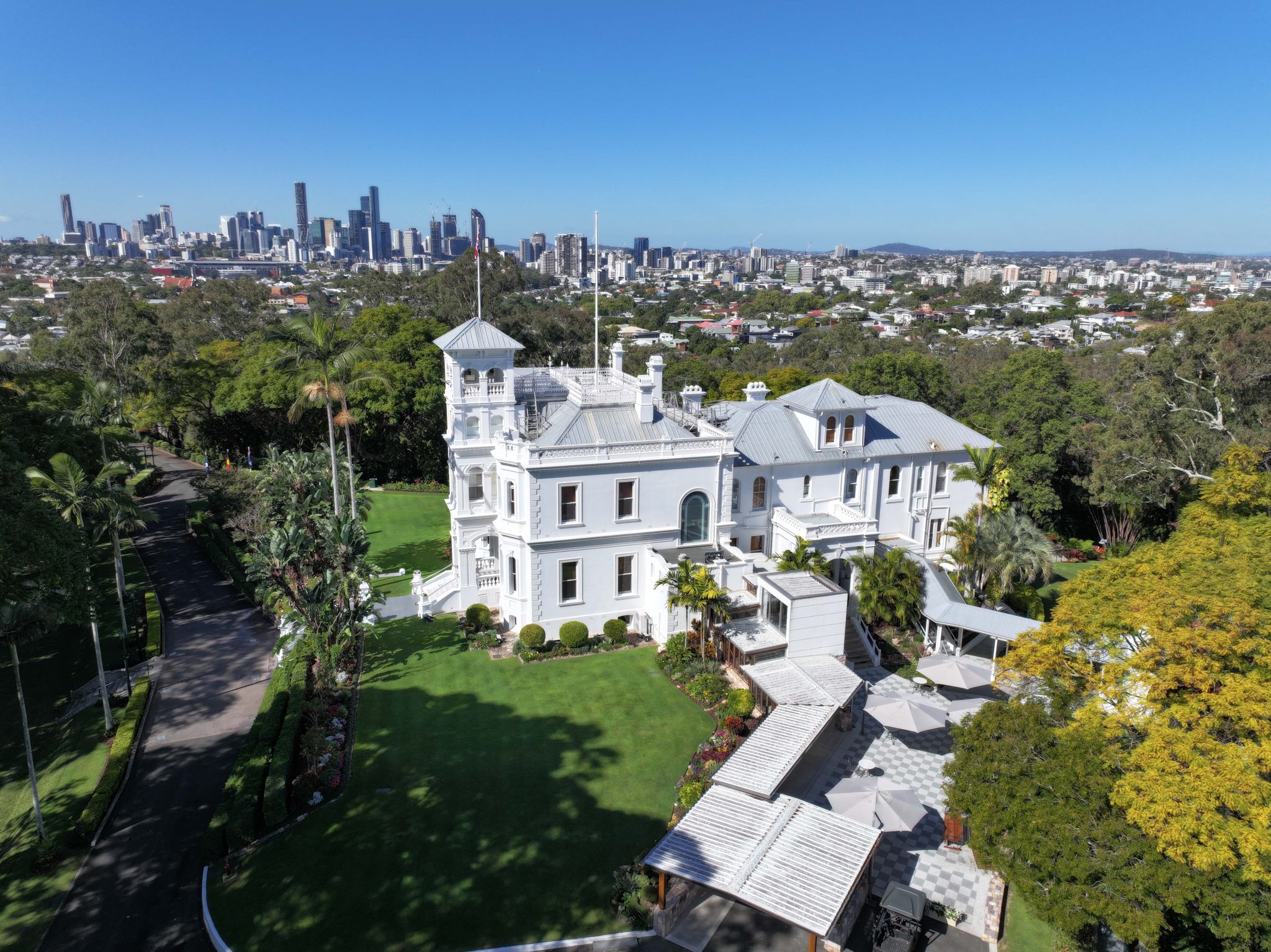
Invaluable heritage fabric and heritage-listed bushlands, valiant efforts to nurture surrounding biodiversity and event management prowess makes the house a haven for all Queenslanders.
The facilities team approaches maintenance and conservation with an attitude of proactiveness, in addition to demonstrating commendable environmental accountability and responsibility. “If we lose a tree from a storm or something, we take it out or replace it with five trees,” says Beale.
“We’re doing a bushland track project at the moment – trying to seal some pathways so we can open up more of the estate, and part of that required some trees to be removed,” he says.
Beale further underscores the house and surrounding estate’s pride in maintaining a sense of environmental responsibility.
“We have around 57 species of birds that reside on the estate, and so we have a nest box program,” he says. “One of our gardeners maintains a log online – the Birds of Fernberg Estate – and he reports any new birds.”
Witnessing transformative periods in the house’s history
Beale has relished the varied opportunities of his role – mainly the ceremonial aspects and the chance to lead many transformations and renovations.
“I’ve been involved with the security operations for eight royal visits,” he says. “I’ve done 20 or 30 open days, and eight years of Christmas lights – the Christmas Lights run over nearly seven nights, with up to 2000 or 3000 people on site each night.”
Beale was also part of the management team that spearheaded a transformative security review in 2012 that elevated the sophistication of technological processes and enabled greater inter-department collaboration.
“This review led to a huge improvement in security infrastructure on the estate. We engaged with QPS to do threat assessments – they give recommendations on where we’re vulnerable and we can develop a plan on how to address those vulnerabilities.”
A fairly outdated security camera system was also given a revamp. “I think we now have 40 cameras and 30 odd security beams – which means more infrastructure and equipment failures, but that’s the joys of having the house in a bushland environment.”
Beale fondly remembers hefty yet rewarding renovation projects. In 2015, the estate’s heritage quarters were renovated to increase the house’s hosting capabilities.
“We renovated the quarters into six ensuite bedrooms, so when there’s guests, we can accommodate them,” he says. “We have 10 rooms that are suitable to host the king when he travels here.”
The dynamism of a facilities team
Beale speaks of an expectation for staff to adopt an all-hands-on-deck mentality to distribute workloads and pressures.
“There’s staff doing multiple jobs – it’s not like a government department where people might have one role,” he says.
“Most of us have three or four different areas of operations that we look after, so we juggle that and make sure that we don’t impact the Governor’s program, because [we’re here] to make sure she achieves what she needs to achieve.”
Beale delights in staff willingness to abandon stringent understandings of workplace responsibilities. “The team is so dynamic – I’ve got gardeners moving furniture,” he says. “And you’ve got to have that attitude when you work here. If you don’t have that attitude, you’re just not going to enjoy working here – it’s never a quiet day!”
Photography supplied by Government House Queensland.
Marriner Group’s Greg Watt on managing venues that provide an escape to a former time.


