
When attending a concert at a theatre, moseying around an art gallery or museum, strolling past your local community centre or experiencing child-like wonder at the zoo, do you stop to ponder who is in charge of the management and operations of this bustling facility?
In ‘Meet Your Local FM’, we talk with the facility and operation managers, technical service and safety operators, and sustainability officers of iconic Australian institutions.
We’re diving deep to reveal a facility’s inner mechanics, along with the who and what it takes to keep these special spaces running so smoothly. We’re putting a face to a facility and debunking any assumptions surrounding this essential profession, which many don’t know a lot about.
It may seem inappropriate to think of a cemetery as a community space.
However, in his long tenure at the Greater Metropolitan Cemeteries Trust (GMCT), group general manager for the west region Brendan Koch has observed people treating a cemetery as a ‘third place’.
Although a cemetery is a site for commemoration and mourning, it is also a place that people return to. Koch says cemetery attendees find calmness and comfort in its solemnity and reverence.
He forges relationships with people that can last decades and transcend generations.
“When people come to us, they’re at potentially the lowest point of their life,” he says.
“It’s a really difficult time for them, so we try to help them in any way we can, and the interesting thing is we’re building a relationship with them that can last for however long.”
He regularly encounters clients moving around the grounds who have been visiting for 15 years. For that reason, Koch is committed to developing relationships grounded in trust and warmth, so people feel compelled to voice their concerns regarding cemetery maintenance.
“It is rewarding when someone is going through a difficult time and you can go that extra mile to make it a little bit easier for them,” he says. “I think a lot of our staff really pride themselves on that.”
The inherently customer-focused and people-centric nature of Koch’s role challenges the common misconception that his responsibilities exclusively entail digging graves. He pursues enriching the customer experience every step of the way.
“The core of everything we do is to try and make it better for the customer and that presents challenges too, but it’s about meeting people in the middle and trying to find a common solution that everyone’s happy with,” Koch says.
Facility Management spoke at length with Koch about the value of cemeteries subverting traditional understandings of a memorial park’s function and purpose. He discussed how embracing cemeteries as spaces for gathering, congregation, and even celebration, has influenced the design of GMCT’s upcoming Harkness memorial park – Victoria’s largest new cemetery in more than 100 years.
“It’s giving the community something that they can really get involved in and have a bit of ownership in – something they can be really proud of for the next hundred years,” Koch says.
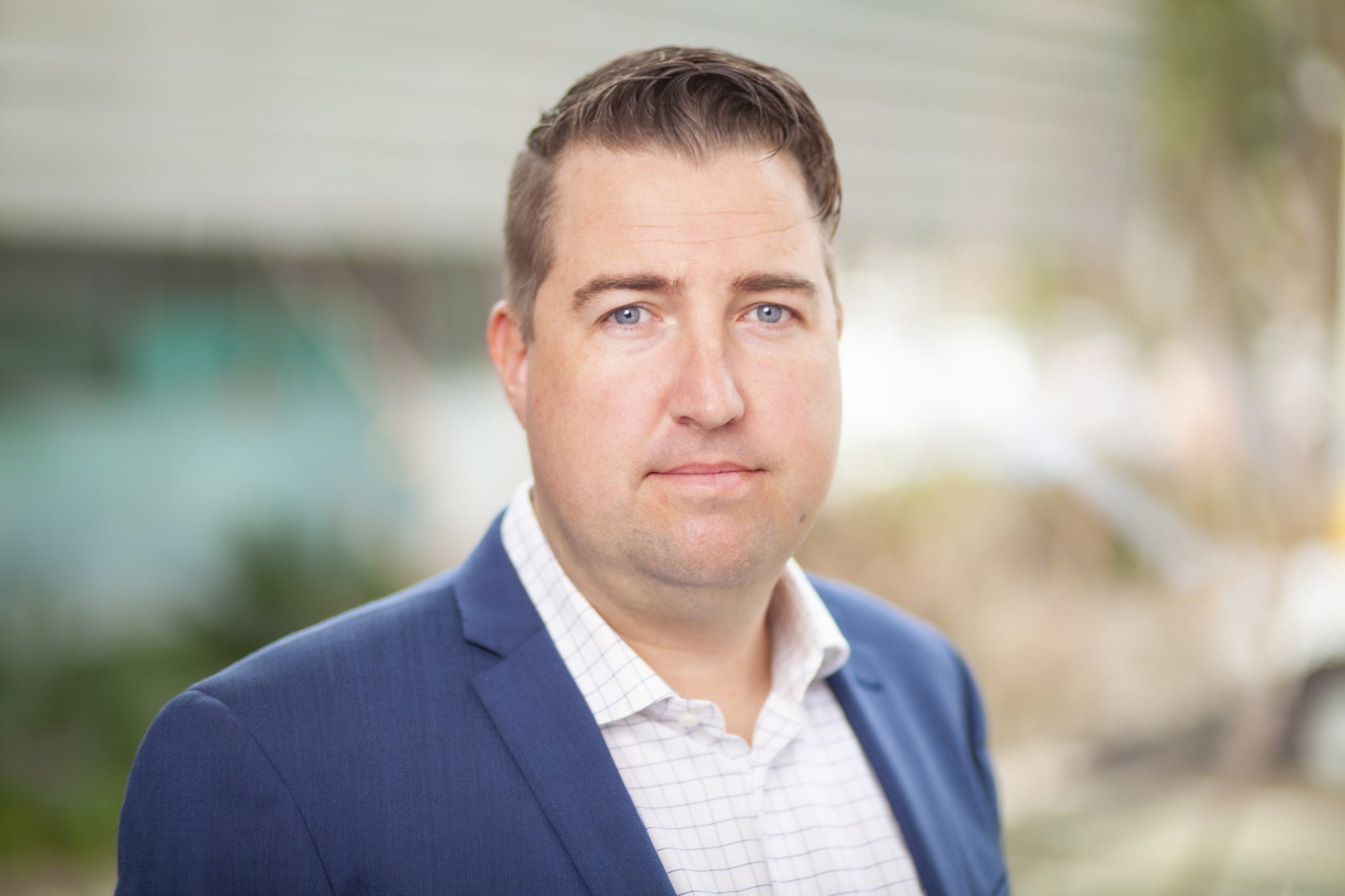
Koch forges relationships with memorial park attendees that can last decades and transcend generations.
A deceptively complex role
Koch attributes his industry start nearly 25 years ago as a horticulture apprentice for GMCT as responsible for his fascination with learning the ins and outs of memorial parks.
He says cemetery maintenance is characterised by complex processes and systems unbeknownst to most people.
“I was always interested in doing different things within the park and learning more about the different operations we do,” he says. “There’s so many other portfolios to cemetery management – the maintenance, the horticulture, all those different things.”
Following his apprenticeship, Koch moved away from cemeteries and gained experience across a variety of construction fields that exposed him to different knowledge systems. He eventually returned to GMCT into a supervisor’s position and then ascended to operations manager at the Lilydale site. He is currently based in Altona as the group general manager for the west.
He reiterates the reality that people are often surprised by the complexity of his management responsibilities at GMCT, an organisation Koch describes as a bustling hive of activity.
“There’s 21 sites across Greater Melbourne, and I think we have about 290 staff across those sites,” he says.
Adept organisational and people skills are imperative for Koch’s role, alongside calmness and composure. “Customers come in every day and we help people by addressing their needs and attending to ongoing activities,” he says.
Solving problems with a finger in every pie
Koch’s days are often marked by mutterings of ‘best-laid plans’. However, he appreciates the excitement that comes from responding and reacting to unexpected hurdles.
“With the greatest intent, sometimes we’ll have our day mapped out beautifully and we end up doing the complete opposite,” he says. “The key part of my day is responding to challenges as the day comes.”
Koch alludes to the somewhat unofficial mantra in facilities management of prioritising proactiveness over reactiveness.
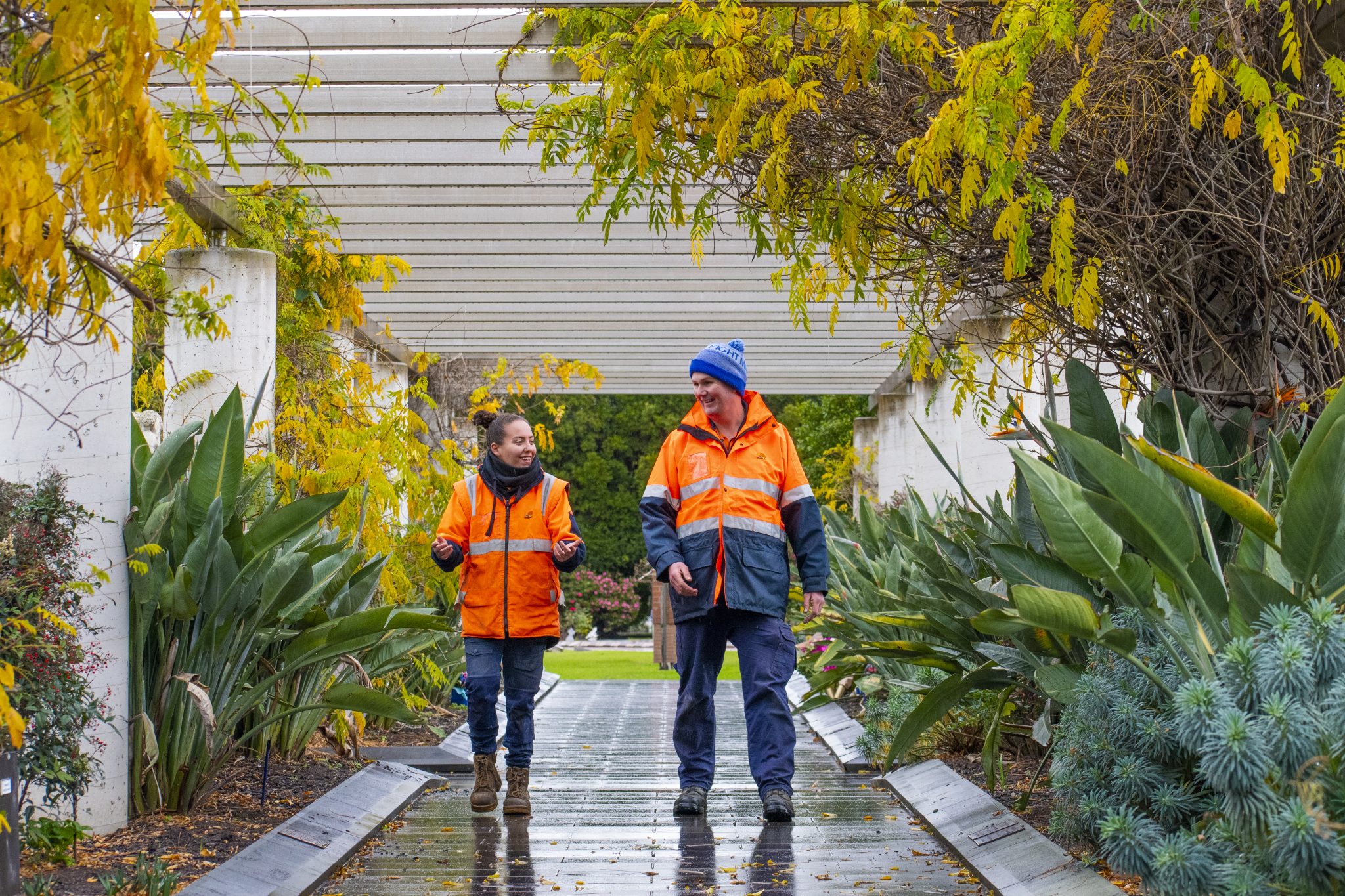
“Making sure we are proactive in our approaches is probably the key day-to-day thing, and pivoting to make sure that anything that does pop up, we’re on top of it,” he says.
Koch relishes having a finger in every pie of GMCT, which allows him to participate in budget reviews, goal setting, collaboration with the finance and Occupational Health and Safety (OHS) department and future planning – the latter occupying a hefty chunk of his role.
“We’ll work closely with different departments if they’re building a new area for us or a new development to make sure that they’re meeting all the things that we need to run the business,” he says.
“We’re almost involved in every aspect of what goes on in the business, rather than just operations – we do a little bit of finance, a little bit of governance and operations, even a little bit of HR.”
Addressing expectations of clients
Koch appreciates GMCT as a well-resourced and sufficiently staffed organisation, meaning the burden is shouldered evenly during chaotic and busy times. As mentioned, facility management is often overlooked as a client-facing role, and while Koch readily embraces being across all facets of GMCT, it can risk delivering inconsistent customer service.
“You do have to have your mind in different places at once to make sure everything’s coming together and that can be challenging when the primary part of our role is customer service,” he says.
“It can be difficult to pivot to other areas when you do have clients that need to be responded to in tight deadlines.”

Altona Memorial Park, where Koch is based.
As cemeteries are inherently public-facing facilities and sites of solemnity and peace, meeting delicate public expectations can be difficult.
“Balancing the expectations of the public can be challenging, but in a good way,” Koch says.
“We have to navigate doing what we can to help someone when they might be expecting something we just can’t do.”
Managing cemeteries sustainably
Koch anticipates scant land for cemetery expansion being a future problem that drives research and investment into renewable tenure.
“It certainly is challenging for us when a site transitions from an active site to a perpetual site, so how do we run them sustainably into the future?” he postulates.
There is active advocacy for cemeteries in Australia to embrace the historically contentious topic of renewable tenure – a form of grave reuse – and adopt grave recycling practices championed overseas.
Koch says any new innovations in cemetery maintenance must be environmentally and financially sustainable and involve community consultation.
“We need to make sure that the maintenance levels we are doing are appropriate for the expenditure for the site,” he says. “It can be a bit challenging when we start to pivot the standard and have to drop back mowing a little bit just to make it more sustainable, but we work with the community to make sure they understand the standard.”
Dismantling assumptions of a cemetery’s purpose
Koch says gauging community desires is essential in cemetery management, alongside ensuring cemeteries are substantiating reasons for upgrading a site that families may have been visiting for decades.
He admits considering a cemetery as “evolving” may seem paradoxical, as it appears as a rather stagnant and permanent place. However, Koch attests to the significant evolution of cemetery maintenance in recent times.
“We’ve done a lot of innovation with products and we try to hear what people want,” he says.
GMCT offers numerous burial options such as vaults, lawn headstones and plaque graves, mausoleum crypts and natural burials. Additionally, the trust provides a variety of cremation and memorialisation options, including water features and seat memorials.

Kelior Cemetery
“We don’t just have the traditional old big concrete headstone in the graveyard,” Koch says.
“We’re innovating and looking at different ways you can do things.”
He addresses people using cemeteries for leisure and exercise as an accessible green space. GMCT is working to dismantle the stereotypes of a cemetery noted in the media as a place shrouded in elements of macabre and fear.
“We’ve really tried to push in the last five or so years the idea that a cemetery is a green space to walk the dog or ride your bike because they’re beautiful parks,” he says.
“We’re trying to build something that’s a little bit different and break down the stereotype of cemeteries in horror movies.”
The cemetery as a multi-purpose space
The planned memorial park at Harkness – a 128-hectare site with ASPECT Studios as the principal design consultant – exemplifies GMCT’s aspiration to diversify the uses of a cemetery and inadvertently achieve sustainability goals.
“We’re asking how cemeteries can be used for other things too, not just funeral services, but could someone have a wedding or a community event or could the local football club have their presentation at the cemetery?”
“Harkness will be a multi-purpose space and you won’t actually realise you’re in the cemetery, you will just think you’re in a really nice event space.”
Koch has been involved with Harkness since the early planning phase and is excited by the opportunities and possibilities the space offers to the community.
“It’s a large amount of investment that we’re putting in and it’ll be a really significant landmark for the community,” he says.
Alongside consultations with Wurundjeri Traditional Owners and First Nations communities, the project conducted two years of community engagement to ascertain hopes and intentions for the space.
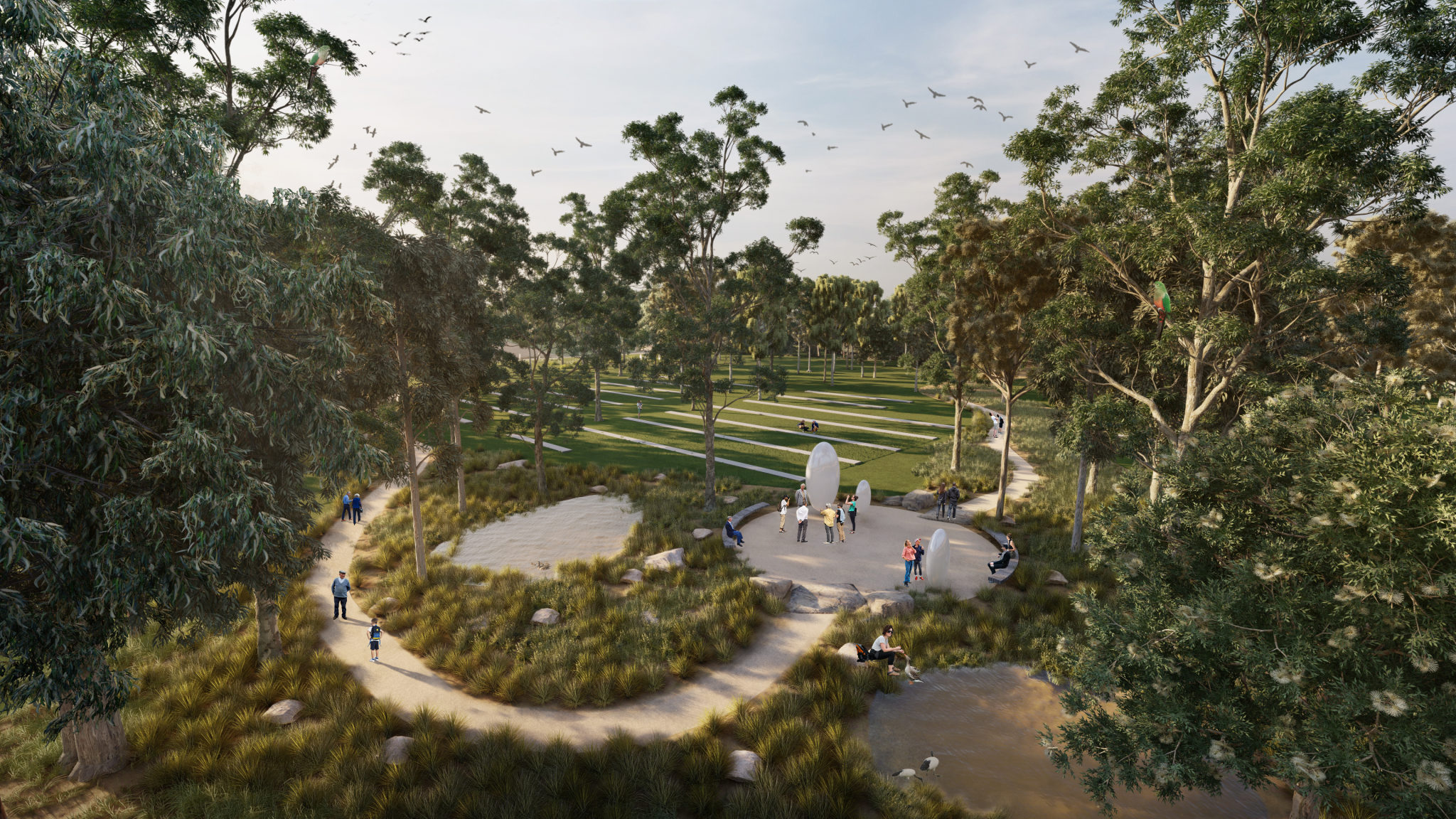
The planned memorial park at Harkness exemplifies GMCT’s aspiration to diversify the uses of a cemetery.
“We wanted to find out what people want this to be, the intent was always to build something for what we want it to be, not what everything else is,” Koch says. GMCT is delivering the project in multiple phases to allow the project to evolve with community needs.
The Harkness masterplan was developed by a consortium including Aurecon, Architectus, McGregor Coxall and Greenshoot Consulting with the goal of increasing the inclusivity and accessibility of a memorial park. For example, funeral services will be held in flexible multi-use ‘ceremony spaces’ rather than chapels advertising a singular faith.
Overall, Harkness’ design will reject the idea that a memorial space is a single-use resource. ASPECT Studios global design director Kirsten Bauer says reimagining cemetery design is essential in addressing the needs of Victorians now and in the future.
“Through a commitment to long-term planning and community engagement, GMCT is delivering the social and environmental value communities expect,” she says.
Observing the passage of time on a short stroll
Koch speaks of the intrigue and fascination afforded by engaging with gravestones dating back to the late 1880s. Although heritage overlays make refurbishing efforts such as tree removal tricky, Koch says the heritage fabric adds to the sacredness and significance of the site and draws people in to discover the vastness of a region’s history.
“Some of our sites do have heritage overlays on them, which we say is challenging, but protects those spaces,” he says.

Altona Memorial Park Chapel of Peace
“We try to leave those heritage areas as they are and maintain them as best as we can,” he says. “We see it as an honour that we get to look after these sites that have significant stories to tell.”
The honour of observing the passage of time in a mere five-minute walk around the cemetery is never lost on Koch. “The way the headstones change over the years and designs – it is like a walk through time,” he says.
Smart technologies enhance the customer experience
GMCT’s embrace of smart technologies has bolstered staff efficiency and allowed customers to have a user-friendly experience.
“We’ve developed some online mapping that’s accessible to the public so they can do deceased searches,” Koch says.
He says online mapping seeks to remedy the common sight of people walking around directionlessly.
“You’d see people wandering around not really knowing where to go, but we don’t seem to have those problems now after taking things online and making it better for everyone.”
Koch says digital technology has also elevated safety standards at GMCT. “Apps on iPads mean we can do our safe work method statements a little bit faster and that has sped things up and made it a little bit easier for staff,” he says.
“We’re always looking for new technology that we can use to cut the grass a little bit faster or recycle things.”
Customer Relationship Management (CRM) system upgrades mean staff out in the field receive a maintenance request immediately.
“It also has raised our safety standards for the machinery we use out in the field,” Koch says.
A meaningful two-minute task
Koch says the people he has worked with at GMCT amount to a major career highlight.
“I think the biggest highlight in my career is the people that I have brought along for the journey,” he says. “It’s been fantastic to develop a really great team and watch them move through the ranks.”
“One of my staff members moved up last year into a management position and it was a great achievement for the team and what we’re doing.”
He is inspired by the community aspect of his role and customers extending gratitude for seemingly minor things.
“I picked up really quickly the power of doing something that you might think is insignificant such as planting a tree or mowing a lawn, a two-minute job, but it means so much to the person who you did it for.”
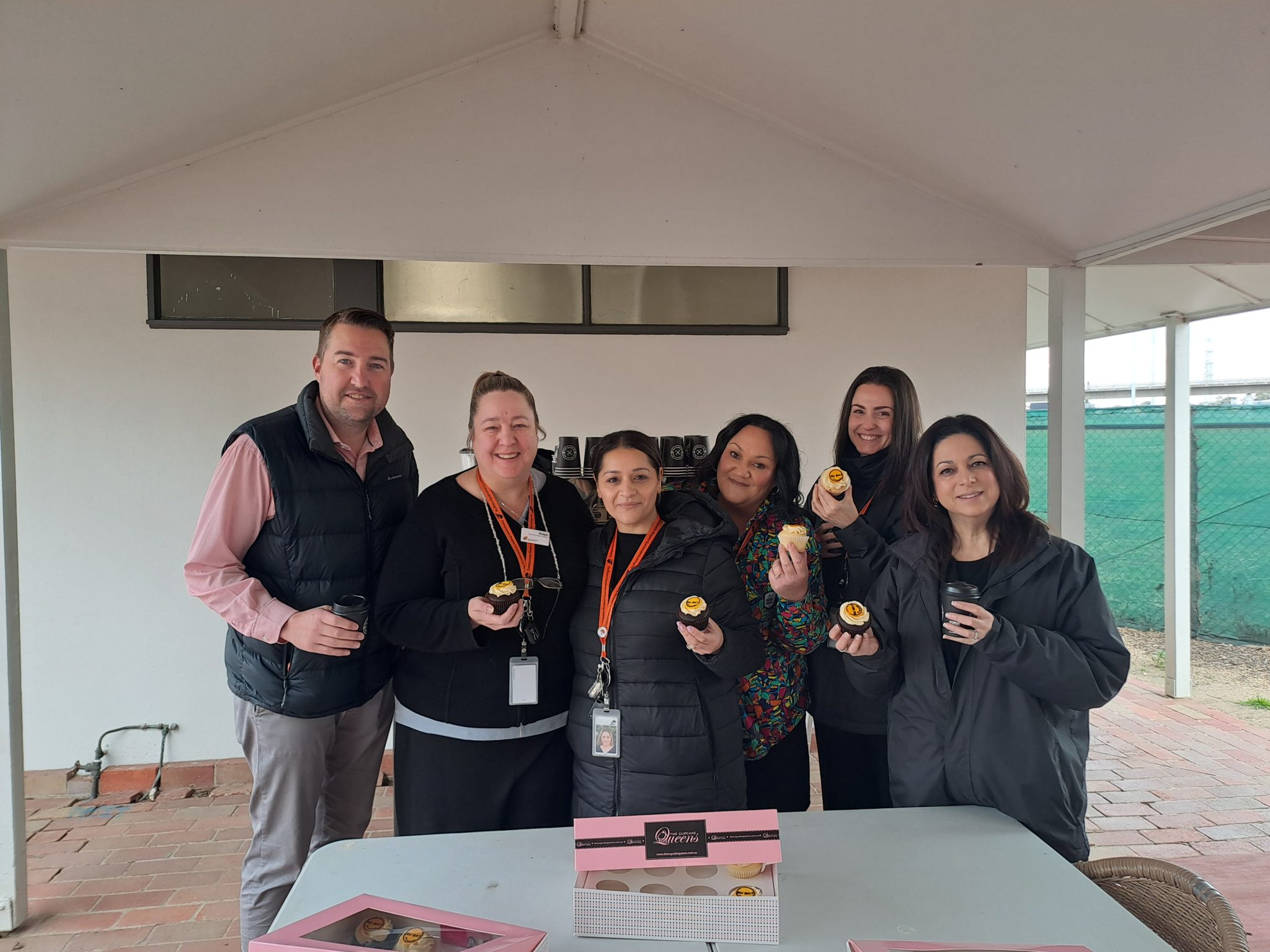
Koch says the people he has worked with at GMCT amount to a major career highlight.
“It’s a really rewarding job. I’ve always had a lot of pride in what we do,” Koch says.
He says GMCT is unwavering in its commitment to meet staff and customer wellbeing.
“It is what I love about the company,” he says.
“We really care for our staff and the customer and go the extra mile to make sure our staff have a great workplace, so they can pass that on to deliver a really good customer experience.”
Photography supplied.
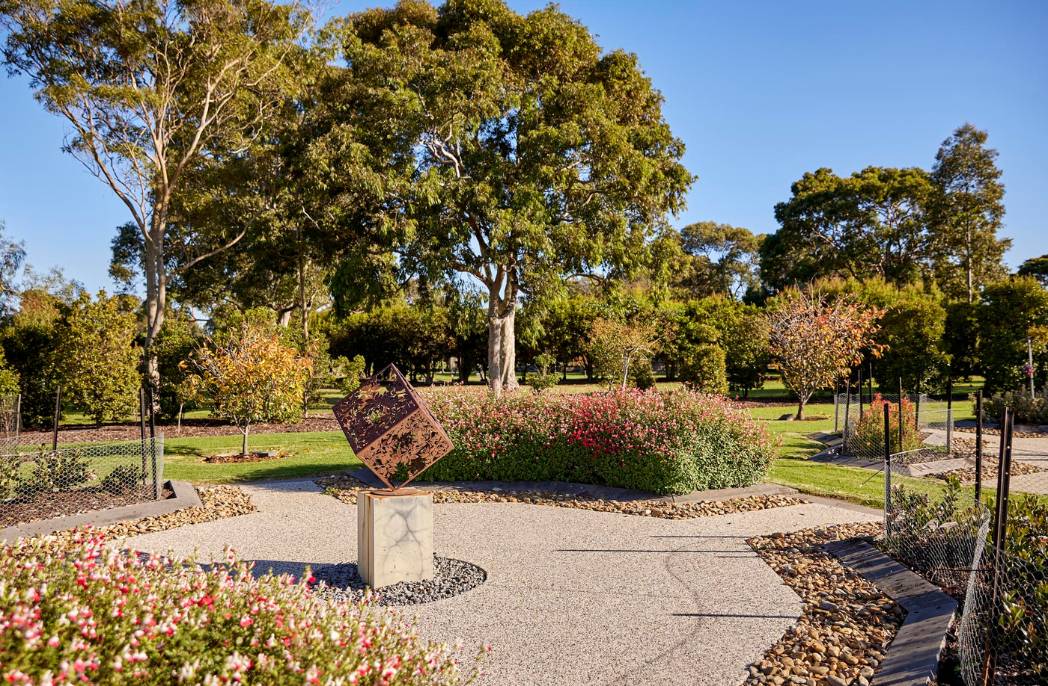
Featured Image: Altona Memorial Park.


