

Working or studying at home is a reminder to some people of the lockdown years – a time when people yearned for in-person office perks such as gossiping around the coffee machine, bouncing ideas off each other and the morning commute. Office culture seemed like a distant dream.
Many are pursuing a balanced work week that features equal bouts of homebound quietness and calmness and the hearty and robust collaboration and interaction that comes from being in an office.
To finish off our ode to flexible working solutions, Facility Management sat down with HDR associate director and interior designer Max Navius to unpack how to have your cake and eat it too in a flexible working world.
For Sydney-based Navius – who boasts 20 years of experience across HDR, Cox and Bates Smart – home is a work-free sanctuary where he can unwind and decompress, which is why he opts for the now somewhat uncommon choice to work in the office five days a week.
“I come to the office every day because that allows me clear separations and delineations between work and life,” he says. A classic tale of wanting to separate church and state, Navius sees home as a haven absent from an office-associated flurry of activity. However, he is comforted by the choice to opt to work from home when needed – flexible working solutions in a nutshell.
And working from home is not suitable for everyone – many employees cite difficulties in concentrating and focusing in a home environment. “Often people find it easier to focus in an environment that is already set up economically and ergonomically for work,” says Navius.
He admits that during the lockdown years, he fell into the habit of working long hours at home as time and energy were not being funnelled into other areas such as lunch and coffee breaks.
“I feel like I subconsciously ended up working longer and I started really early because you were like, ‘Okay, I’m awake now, I’m just going to start’,” he remembers.
HDR’s commitment to flexible working solutions
Definitions of flexible working fluctuate depending on the industry. HDR prides itself on having a healthy and happy workplace culture and encouraging open and honest dialogue.
“HDR as a company is committed to making sure that all employees can effectively balance their work life with family and lifestyle needs,” says Navius.
He says Australian architecture studios are generally governed by the expectation that employees spend three days in the office. Flexibility is granted with a reasonable amount of consistency, and agency is placed in the hands of employees with trust and faith.
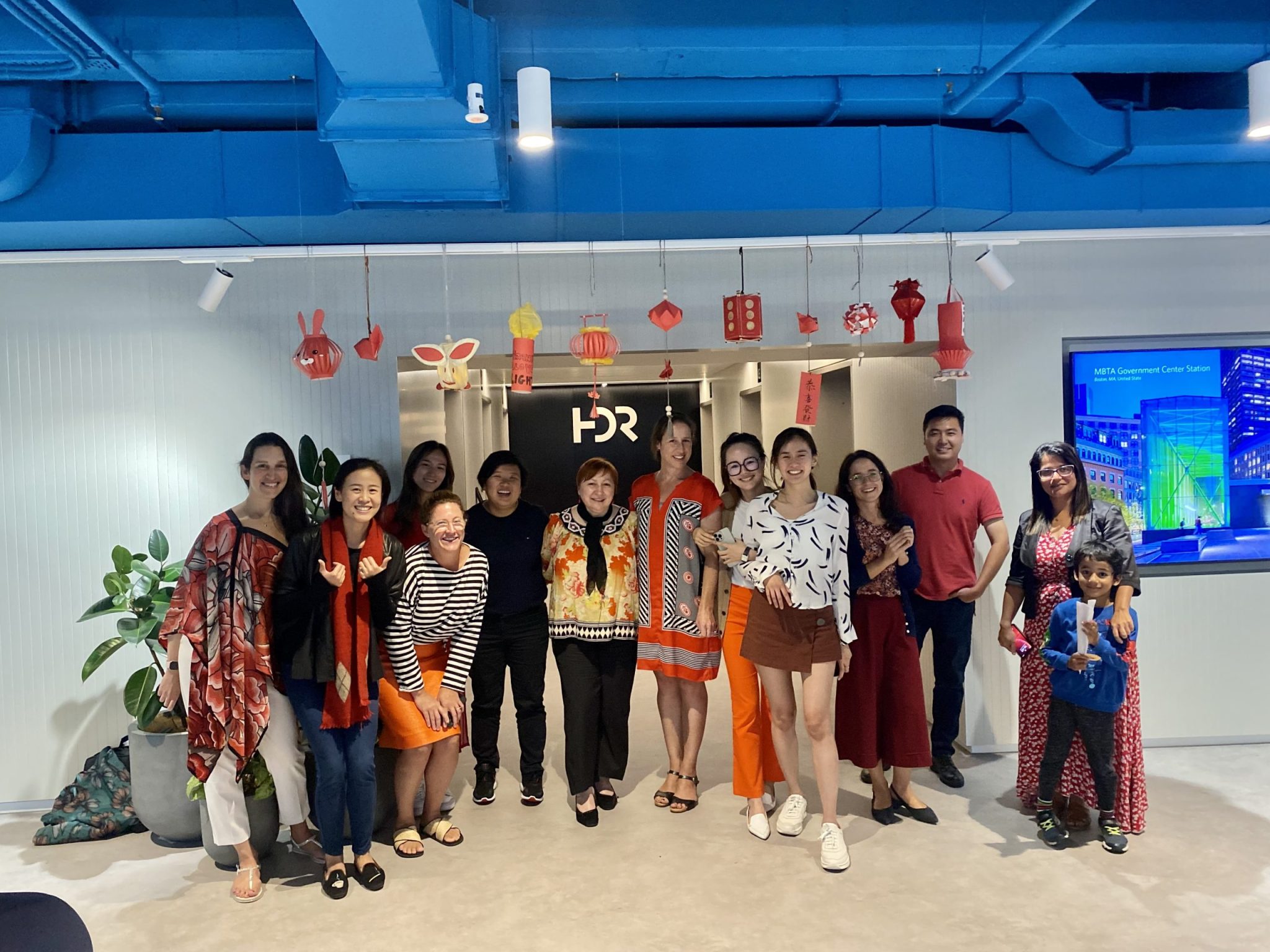
HDR Lunar New Year celebrations
Navius says HDR’s Sydney office offers numerous benefits to entice people into the office and build camaraderie and morale – monthly huddles for industry updates, celebrations for Chinese New Year and Nowruz, scavenger hunts, charity work, raising donations and fortnightly design conversations with a catered lunch.
These in-office perks drive enthusiasm and spirit for activities that are devoid of work reminders.
“We try to encourage these regular catch-ups for team bonding – to have that identity within the industry and build up that relationship within the office,” says Navius.
“If you provide a positive environment in the office, people love to come in.”
He is cognisant of the ripple effects of optimism in an office setting and the importance of senior employees setting a precedent of healthy habits. “We are aware that means that from the top down we need to ensure that we have a positive work environment,” says Navius.
Is architecture the ideal industry for flexible working?
Architecture has cultivated a reputation for occasionally setting unrealistic and unsustainable working standards. Some architects have reported tertiary educators glorifying all-nighters as a rite of passage and the pathway to success.
Navius addresses the expansive grey area in the discussion regarding architecture’s need for reform. “It’s not always clear cut and different people have different views,” he says.
“We are already in the middle of the cultural reset that puts increasing value on work-life balance and challenges glorifications of obsessive work hours and unsustainable practices and unrealistic expectations.”
HDR plays a part in reversing the assumption that bending over backwards at the expense of personal wellbeing is synonymous with commitment, discipline and productivity. Navius believes the pursuit towards excellence does not need to rely on harmful standards.
“You can choose to work remotely or in the office depending on which setting best suits the type of work that you are undertaking – promoting health and safety and successful work,” he says.
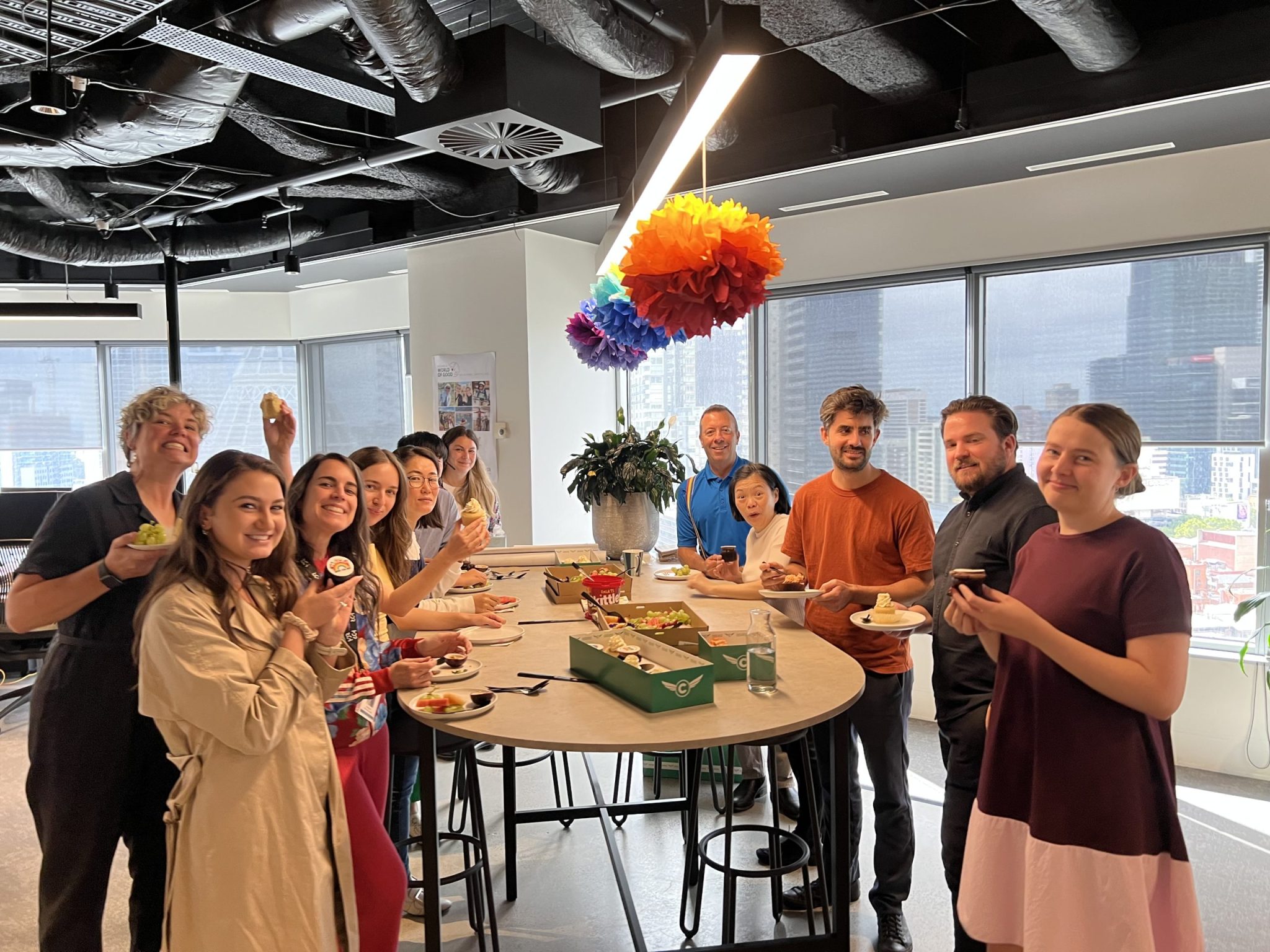
HDR Pride Morning Tea
Architecture’s mentorship slightly suffers with flexible working
Navius speaks of how architecture’s emphasis on the importance of mentorship from senior figures to facilitate personal and professional development dampens in effectiveness with flexible working solutions.
“We are conscious that the mentoring opportunities for the graduates and younger staff are a lot richer when they’re present in the office and able to work in person with people in leadership positions,” he says.
Additionally, Navius addresses the advent of immobilising virtual meetings that come with people working from home. A quick five-minute check-in online can turn into an hour-long conversation. Navius says if these meetings were conducted in an office, they may simply be incidental conversations that would not distract from the flow of a workday.
“Working from home has normalised back-to-back meetings,” he says. “This habit now is really hard to get rid of because it’s so easy for someone to say, ‘I’m going to have a quick five-minute meeting,’ but it ends up being an hour.”
He also emphasises the usefulness of overhearing conversations in an office setting to stay informed and avoid time-consuming meetings. “You learn a lot of the things happening incidentally,” says Navius.
The rewards and challenges of flexible working solutions are clearly industry-specific and there are exceptions. Flexible working must work for employees, employers and the company, but as Navius addressed, simply having the option to work from home is a great place to start.
Photography supplied by HDR.
Plus Architecture’s Rebecca Wright on why flexible working is reliant on trust.


