

By Jim Round
Exploring the impact of Victoria’s Container Deposit Scheme when applied to commercial venues.
Drink containers might seem like a small part of a venue’s waste stream. Multiplied across events, seasons and sites, they present a major opportunity, not just in terms of recycling, but also in how commercial venues contribute to circular economy outcomes, generate revenue and set new benchmarks for sustainability leadership.
Facility managers are often the unsung heroes of operational efficiency, juggling safety, logistics, contracts and budgets, often with minimal resources. When it comes to waste management, they’re also uniquely positioned to capture value that would otherwise go to landfill.
Since launching Victoria’s Container Deposit Scheme (CDS Vic) in November 2023, the program has seen a wave of community enthusiasm with more than one billion containers returned in its first year. But the commercial and venue sector remains largely underleveraged — not just in Victoria, but nationally — and that’s where the next phase of innovation needs to happen.
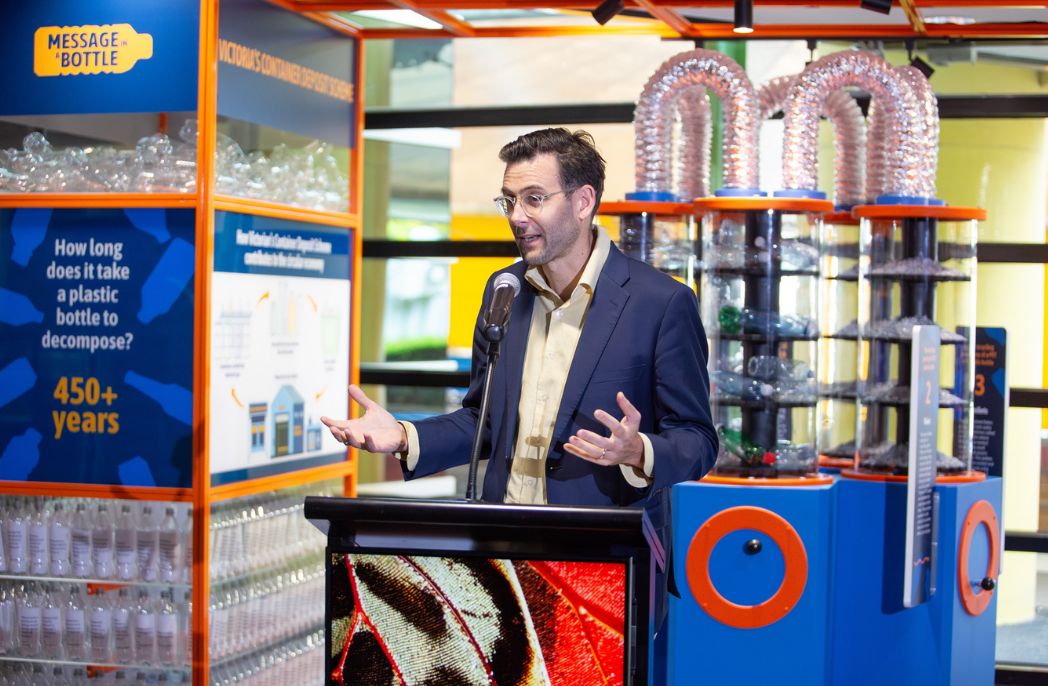
Jim Round
From operational challenge to strategic opportunity
The VicReturn team led a sector-specific workshop recently at the Sports Environment Alliance (SEA) Summit. During the workshop, it became apparent that while industry support existed for the scheme, operational logistics added barriers preventing venues from embedding CDS programs into their operations.
To make a large-scale change, venues and stadia need to shift their view of bottles and cans from single-use general waste to circular materials. Then, they can begin to incorporate fit-for-purpose infrastructure into venues. Once facility managers flip the value of drink containers from waste to revenue, they can start to understand the importance of secure storage, which is another logistical consideration.
Facilities must plan for back-of-house storage that keeps containers safe and accessible until they are collected. Additionally, public-facing bins need careful consideration, as does retrofitting waste systems into existing venues. Bins must be designed and labelled to reduce contamination, strategically placed to be visible, while also complying with safety standards and complementing the venue’s aesthetic.
Factor in the long-term investment of CDS by including collection bins in future facility upgrades and mapping bin placement into new venue designs. The key is to embed container recovery into everyday operations. Integrate it into cleaning contracts; train staff and partners and offer incentives to participate; and use transparent data to track performance.
We’ve seen sporting clubs, hotels and event spaces recover tens of thousands of dollars per year through container returns. The Australian Open brought in almost one million containers this year alone, equating to nearly $100,000 in returns – all donated to the Australian Tennis Foundation.
But successful implementation takes planning, ownership and support. With the right system of clear bin infrastructure, staff training and scheduled collections, facilities can unlock a reliable and consistent revenue stream.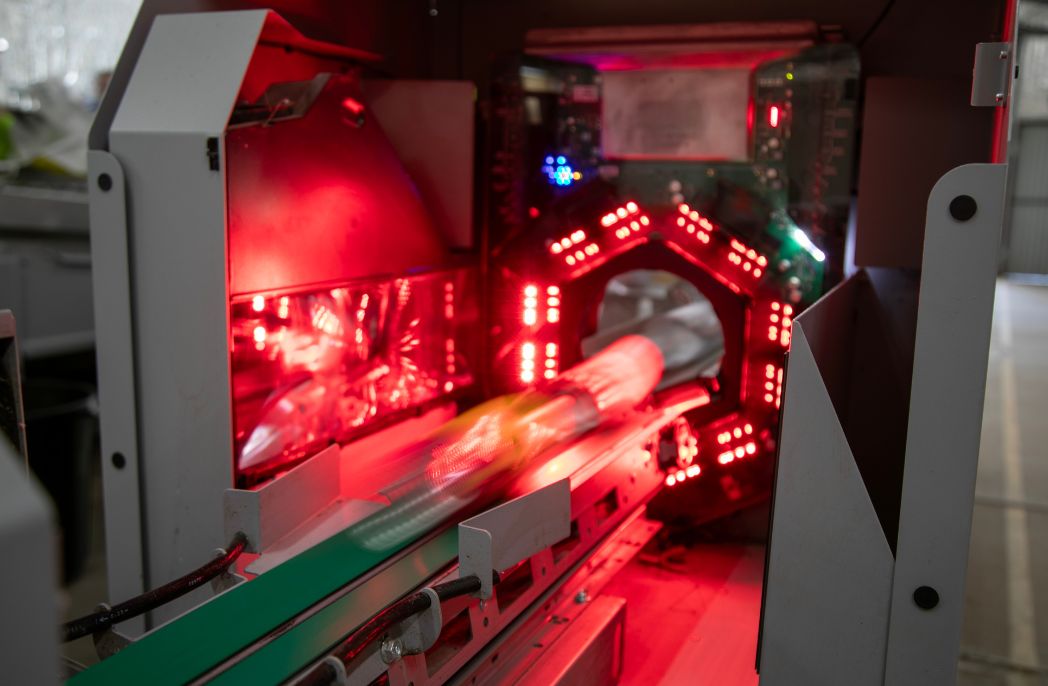
Lessons for national policy and the 2032 Games
Australia now has container deposit schemes operating in all major states and territories, but the way they intersect with commercial operations, waste contracts and venue-scale logistics remains inconsistent. With major events coming up over the next few years, such as the Brisbane 2032 Olympic and Paralympic Games, there is a generational opportunity to design waste systems that bake in circularity, not bolt it on as an afterthought.
Think of the Olympic Village, stadium precincts or fan zones. If planned well, these could be showcases of closed-loop design, with drink container refunds going back into community sport, environmental initiatives or local infrastructure. That requires clarity from the government on the need for container collection and a willingness to treat waste not as a cost centre, but as a measurable, recoverable asset.
Global Innovation to learn from
Internationally, several models are already pushing the envelope. In the Netherlands, the deposit return system includes large commercial return points, incentivising retail and hospitality participation.
In Norway, reverse vending systems are integrated with loyalty programs at sporting venues, driving both revenue and fan engagement.
Germany has a 95-96 percent return rate and Sweden is returning 90 percent. Ireland’s Re-turn was only established in September last year, but it’s already achieving a 73 percent return rate.
By way of comparison, here in Australia, many of our CDS schemes are returning around two-thirds of all containers. That means a third of all containers are going straight to landfill, even with the schemes in place.
In the US, some venues are experimenting with real-time waste tracking systems using AI technology to analyse contamination, streamline collection routes and measure performance against sustainability KPIs.
On the AI front, the CDS Vic Dandenong South Depot is the only unit in the southern hemisphere to use an AI-powered recycling machine to process and sort a high volume of containers quickly. The machine, aptly called the CountAIner, uses advanced AI machine learning to count, identify and process eligible returns in bulk at speeds of up to 1500 containers per minute. This advanced technology is a step towards driving smarter, more efficient waste management across the state and country.
With the advancement of AI, we’re only beginning to scratch the surface of how data, machine learning and automation could optimise commercial recycling. Imagine being able to predict waste volumes per event type, benchmark against peer venues, or dynamically adjust staffing based on forecasted return rates. There are real opportunities waiting to be unlocked through collaboration between governments, industry and tech providers.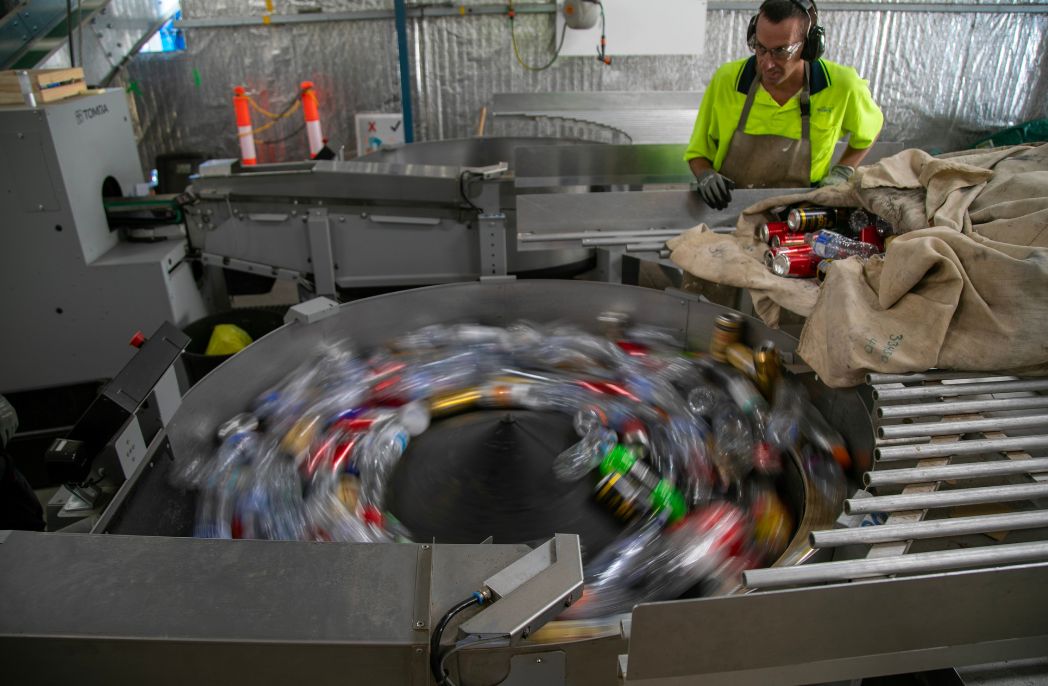
The way forward
Of course, not every strategy works. Overly complicated systems, lack of education or unclear ownership of waste streams often doom good intentions.
There are facilities that invest in infrastructure that’s underused because it wasn’t coupled with behavioural insight or contractor buy-in. The most effective waste recovery programs are those that start with a clear business case, strong leadership and aligned incentives – both financial and operational.
If you are the facility manager of a venue, stadium or public facility, this is the time to start asking:
• Are we capturing the value in our waste? If not, there is an opportunity to boost revenue here.
• Who owns the return rights on containers at our events? Should the refunds go to the hirer or the venue?
• How can we partner with our state scheme or a commercial collector to streamline this? And more broadly, how can we, as an industry, help shape the national conversation on circular economy policy?
Because the goal isn’t just to make recycling easier, it’s to make resource recovery a normal, profitable and expected part of doing business.
Jim Round is CEO of VicReturn, the coordinator of Victoria’s Container Deposit Scheme.
This story originally appeared in the October edition of FM Magazine. To download the full edition, click here.


