

Cyber blackouts, often caused by criminals capitalising on weaknesses in digital networks, can drain income and compromise privacy and security for facilities, such as shopping centres, restaurants and large pharmaceutical enterprises. Australia’s ageing power infrastructure, readiness and education gaps leave facilities susceptible to cyber attacks.
Following the recent revelation from insights agency Gartner that unplanned power outages can cost businesses up to $5600 per minute, Facility Management spoke with PSS Distributors general manager Terrence Daniel to unpack how Uninterruptible Power Systems (UPS) and a simple 4G power dongle can fortify facilities against cyber blackouts, alongside the need for a basic user-friendly update to cybersecurity measures and occasionally overwhelming technological innovation.
One of the largest cyber blackouts in Australia’s history, last year’s infamous and calamitous Optus outage exposed the inescapable perils of a cashless society and the choke-hold digital networks have on humanity. Flights were missed, Triple 0 calls left unanswered, small businesses unable to trade and trains grounded to a halt.
The outage also revealed severe readiness gaps and a lack of education surrounding basic cybersecurity measures, namely the value of a facility having a UPS.
A UPS is a battery unit that protects facilities and homes against power disruptions such as failures, sags, brownouts, surges, spikes and electrical noise. PSS Distributors general manager Terrence Daniel believes it should be a facility staple.
“If your router isn’t connected to a battery backup system such as a UPS, your whole facility can turn off,” Daniel says.
Depending on the typology and scale of the facility, power outages and cyber blackouts can result in costly and life-threatening ramifications. Such outages are only set to increase with extreme weather conditions necessitating surging power demand from ageing plants.
“If a card can’t access the internet at a local cafe, how are they to deal in a card transaction?” Daniel says. “Everything falls back to cash and as we know, most transactions these days are over card. If a small deli or cafe has a cyber blackout, it can essentially run them into the ground.”
He also references the unsafe implications of a pharmacy or hospital losing power, particularly for vaccine storage. “A small independent company can hold up to $20,000 worth of vaccines in a fridge,” Daniel says.
“If their router goes out and they can’t communicate, they can’t see if their fridge is turned on or off.”

Terrence Daniel believes a UPS should be a facility staple.
Security loses all value without a UPS
With origins in South Africa as a family business, PSS Distributors is the largest security power supplier in Australia. The company has specialised in UPS solutions for 30 years and is a national distributor of Redback racks, server and data racks and IP66 stainless steel enclosures.
PSS Distributors serves a variety of high-profile clients such as NAB, Monash Health, Bunnings, Canon Medical, UNSW and Vacc-Safe. Last September, PSS Distributors and Vacc-Safe launched the VACC-Safe PowerGuard, Australia’s first vaccine refrigerator equipped with a built-in UPS battery backup and bestowed with the honourable moniker of a vaccine’s ‘best friend’.
Daniel, who started at the company as a storeman and technician and progressed to general manager, is unflagging in his efforts to emphasise the importance of UPS in tightening security. He says cyber blackouts most commonly impact security systems.
“What’s the first thing a criminal does when they go to your property? They cut the power. How are you going to watch them on CCTV if it’s not being backed up by a UPS?” he asks.
Daniel often comes up against industry reluctance to install a UPS due to cost, however he implores facilities to invest in UPS for safety, as cyber and everyday criminals pounce on the absence of a UPS.
“The cost is more, but if you do not have a UPS on your CCTV, it is pointless – plain and simple.”
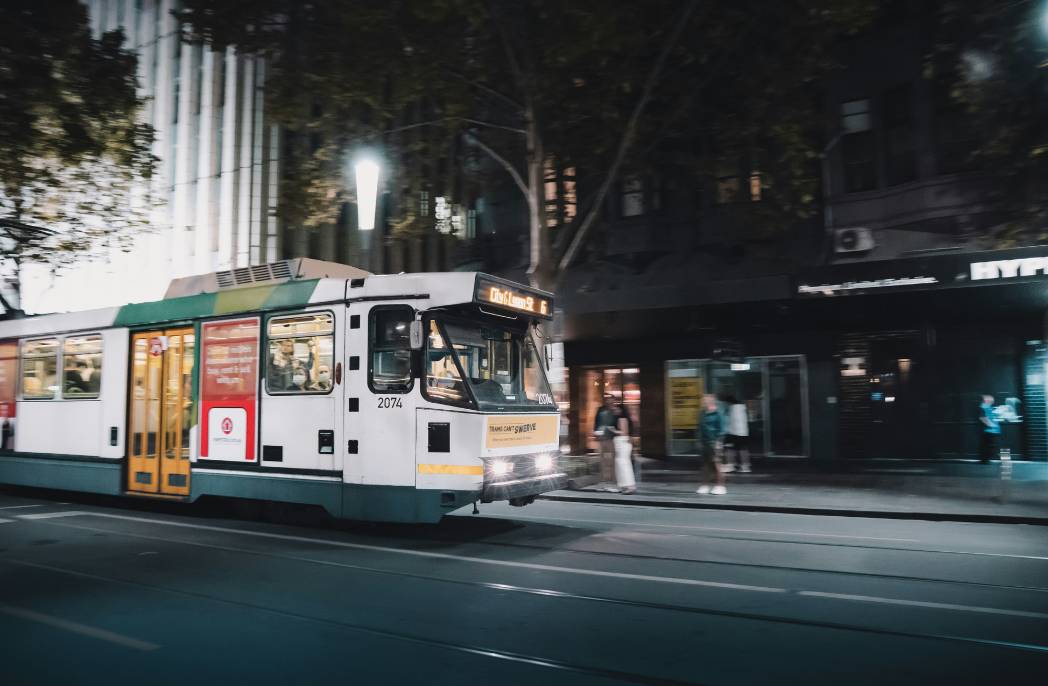
Last year’s infamous and calamitous Optus outage exposed the choke-hold digital networks have on humanity.
Australia’s ageing power infrastructure worsens attack threat
Daniel says the ongoing procrastination to update grid systems increases the chance of destructive cyber blackouts.
“The older our technology and power grids get and the less maintained it is, the more likely we are to experience a cyber blackout,” he says. “For a first-world country, we are not where we should be. This is something that Australia should have overcome because we have the money and the technology to overcome it.”
Although a plethora of renewable energy options is cause for celebration, consistency is essential, Daniel says, and funnelling resources and research into one renewable energy source could prove more beneficial long-term. He applauds the multiple possibilities and potentials for energy options, however it can be distracting and derail productivity and efficiency.
“There’s gas, coal, nuclear, green technology, wind and solar,” he says. “Victoria is trying to get rid of all LPG and other states are backing LPG as their second energy source.”
“Our government is leaving us susceptible to attacks because we can’t pick the right train that we are going down – is it gas, is it coal? Is it renewable or is it nuclear?”
Daniel says a federal cohesion of energy sources would allow for better protection and preparation against cyber attacks.
Outages and security breaches at mission-critical facilities
Daniel lists the main risks for facilities impacted by cyber blackouts as income loss, operational downtime, communication breakdowns and compromised customer privacy and safety.
He says it is imperative for mission-critical facilities such as hospitals or police stations to be cyber-connected and literate.
“If they can’t get onto their system, they can’t do their job,” Daniel says. “If a medical clinic can’t get online to access personal medical information, they could be treating you without all the information or giving you the wrong treatment.”
He unpacks the dangers of power failure at a mission-critical facility reliant on communication via the Cloud or a router to check in with clients and patients.
“If the power goes out, it’s fantastic if a UPS is working, but if you can not communicate with your router, you may not know if a person is safe and the UPS is treating it,” he says.
Complex cyber network outruns humanity
The cyber network is accelerating in power and scope, and subsequent threat. Daniel says once a hacker infiltrates a network, damage of any magnitude is inevitable.
“If you are talking about someone intentionally getting into a cyber network and shutting it down from within – it moves so fast… individual corporations and facilities, and small stores, how are they ever meant to keep up with that?” he queries.
Additionally, smart building technologies commonly noted in facility management, such as automation, remote-controlled devices and IoT leave facilities, are more susceptible to cyber-attacks.
Daniel says wireless communications are particularly threatened and hints at the limitations of a Bluetooth-operated door.
“If the network goes down and you push the Bluetooth switch and the door doesn’t open, if there’s no backup or any secondary latch to monitor it, you’re in trouble,” he says.
Daniel acknowledges the convenience and efficiency of smart systems, however such technologies – sans UPS – increase the vulnerability of systems. “You have to always consider a secondary redundancy system. Technology moves so quickly that we’re really struggling to keep up,” he says.
Cyber networks are a constantly evolving entity that present new challenges and obstacles every year – even rudimentary cybersecurity measures such as changing passwords can be disruptive, Daniel says.

Daniel says something as simple as a dongle can keep a cafe trading for the day in the event of a power outage or cyber blackout.
Planning rather than reacting
A mistake Daniel overwhelmingly encounters is facilities failing to have a redundancy system and reacting instead of proactively planning. “The main mistake we can make is responding when it’s too late,” he says.
He underscores the usefulness of a facility being equipped with a 4G or 5G dongle in its modem. “Something as simple as a dongle can keep a cafe trading for the day.”
A power outage at Daniel’s office demonstrates the necessity of having a contingency plan, as a humble 4G dongle from Telstra remedied a power outage.
“Once there was a power outage and the UPS system kept us running for 30 minutes,” he says. “As soon as the power ran out, we didn’t even notice it ran out, because we dropped onto the 4G dongle. We just noticed the internet slowed down a little.”
Widening the accessibility of cybersecurity measures
Technological innovation is inspiring, however, Daniel advises against premature celebration. He reiterates that contingency plans and increasing the accessibility of cyber security measures are essential.
“I’m very excited by the technology landscape, but I don’t think it’s going to have a big change until we have a more user-friendly update on it,” he says.
Cybersecurity is still a specialist field characterised by vast and esoteric knowledge systems, Daniel says. He hopes to see a development akin to the user-friendly update of smartphones, which were initially fickle to operate, prompting Apple to respond by widening the usability of such devices.
He reports that people of varied technological abilities are often overwhelmed and immobilised by cyber blackouts and remain unsure of where to seek advice and guidance.
“Cybersecurity at the moment is very complicated and the regular person off the street cannot understand it and know what’s going on,” Daniel says.
“Right now, it’s a specialist industry and it’s leaving a lot of people feeling vulnerable. When cybersecurity becomes more user-friendly, then I feel there’ll be a lot of technology down the same route.”
Overall, without a UPS, the convenience and efficiency of most technology is rendered futile.
“It’s fantastic that we have all these new pieces of technology, but they all require power. What are we going to do if we don’t have that?” Daniel posits.
Photography supplied.
Nozomi Networks’ Kevin Isaac on how intersectoral collaboration could save us from cyber attacks.
