

City of Melbourne lord mayoral candidate Jamal Hakim, who vows to make Melbourne a “family-friendly city”, staunchly advocates for regulating and creating legislation around public infrastructure. He argues that reevaluating the design of public spaces will not only incite necessary change for access needs yet equality of participation.
Barriers to inclusive and accessible participation persist in a wide array of public spaces in Melbourne, from bathrooms to tram stops, parks, libraries and shopping centres.
City of Melbourne lord mayoral candidate Jamal Hakim attributes a lack of interbody collaboration and national legislative power, particularly for bathrooms, as the primary factors responsible for perpetuating such exclusion.
“It comes back to a lack of willingness by the statutory arms of government to write legislation that recognises the impact on people,” he tells Facility Management.
Hakim maintains that optimum accessibility will come from recognising the intersectionality of public space users and honouring the diversity of needs by meaningfully designing infrastructure.
“For someone travelling to, living in or working in our city, it’s about them feeling like the city is a space they can occupy comfortably and transit through in a way that feels joyful, that feels like they belong,” he says.
Facility management may hold the key to the realisation of this aspiration, as building a city that allows its inhabitants to safely celebrate their identities starts with including targets in maintenance programs.
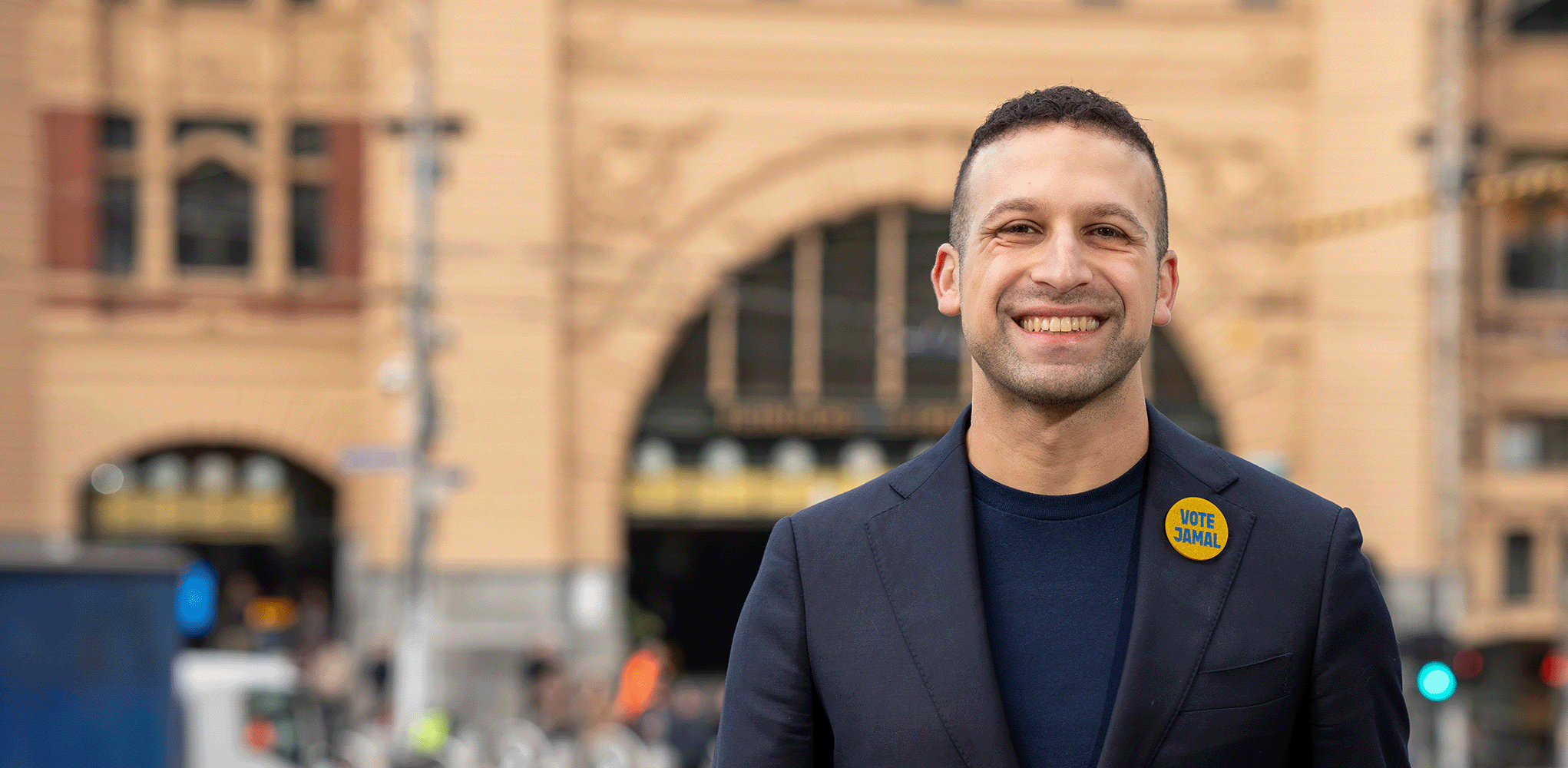
Lord mayoral candidate Jamal Hakim attributes a lack of interbody collaboration and national legislative power as the primary factors responsible for perpetuating exclusion.
Accessible facilities translates to democracy on display
Hakim believes city planning must do more to put structures in place for maximum participation and involvement, as currently, discussions omit measuring the impact on people.
“Ultimately, when we talk about cities, we often forget about people,” he says.
He says discussions and subsequent initiatives that neglect people further breed a grave distrust in politicians, particularly among minority and marginalised communities. For Hakim, democracy’s success is indebted to trust and faith in politics, which comes from people observing aired grievances in action.
“Change requires us to do more than listen, as people need to see what they’re saying in action and to see that a machination of the government and the democratic process is on display,” says Hakim.
“It’s ultimately about having a transparent government and transparent ways of working. That’s why I’ve committed to this donation disclosure as part of this campaign.”
Seeing concerns in action avoids governments and councils enacting tokenistic and baseless symbolic gestures to meaninglessly fulfil the diversity quota, Hakim confirms.
In his pursuit to create a flourishing and functioning city, complete with an abundance of accessible and welcoming spaces, Hakim wants to witness interbody collaboration. “Let’s get the change that actually drives a better Melbourne,” says Hakim.
Unequal physical structures mirrors larger inequity
As recent investigations into the sobering reality of public bathroom accessibility in Melbourne reveal — buildings generally have more toilet facilities for men because urinals are ‘smaller’ — bathrooms remain a landscape that enables outdated gendered assumptions to linger.
Women and girls represent more than half of the population. They also go to the toilet 1.3 times more often than males and spend 1.6 times longer in the bathroom.
Although there have been encouraging leaps forward in public bathroom accessibility — a higher concentration of Changing Places, bins for pad and nappy disposal in men’s bathrooms and the recent Libra Workplace Impact Survey into workplace management of menstrual health — Hakim denotes this grave imbalance of bathroom facilities as “gendered”.
“It creates inequity in the way that we form these physical structures and that translates into other physical structures,” he says.
The lack of legislative power around public toilets – an heirloom from British legislation – is to blame. “Toilets are not seen as a public area which needs to be regulated, legislated and supported,” he laments.
Hakim also points to the complexity of public bathrooms located in private facilities, citing a case in Docklands. “There are toilets that were built in private facilities for public use, but under some sort of agreement, they have shut down because of cost issues, as opposed to handing over the toilets to the municipality,” he explains.
Hakim’s promise to make Melbourne a “democratic, welcoming and flourishing city” undeniably encompasses bathrooms.
“My commitment is to see that the local government has a responsibility for toilets, as the ones who are dealing with the day-to-day of life on the street and with the public infrastructure that is community-based,” he says.
He wants to see regulation and support around bathrooms incorporated into the regular infrastructure commitments of council – rather than lasting for a mere four-year period – to safeguard a more inclusive and accessible future.
Infrastructure hosts intersectionality of access needs and gender discrimination
Hakim maintains gender inequality and barriers to participation collide in public bathrooms. “When we talk about people with disabilities, when we talk about gender inequity, these intersections come through in toilets,” he says.
Bathrooms carry reminders of archaic and irrelevant expectations and standards. Hakim points to the presence of changing tables in female bathrooms, yet not in male bathrooms.
“What does that say to society and young boys about the difference between the roles of men and women?” he posits.
Hakim says the growing number of fathers as single caregivers necessitates redefining infrastructure design.
“One in five single families now are made up of a single dad who is a caregiver,” he says.
“There are an increasing number of single fathers and fathers who want to take a more active role in caregiving, but society is not giving them that opportunity.”
He also references similar obstacles to participation limiting transgender and non-binary people and men who require bins in bathrooms for pad disposal.
“We have to rethink what the infrastructure of toilet facilities look like and how it is built up to allow access,” says Hakim. “Men with incontinence have a problem participating in civic life because we don’t have the facilities for bins and other safe spaces in men’s toilets.”
Hakim proposed motions in council for public toilets to make menstrual health products available, in addition to installing bins in men’s toilets, as too often men requiring bins for pad disposal are forced to use disabled toilets, which creates a flow-on effect.
Thoughtless placement of public assets and the danger of ‘accessibility suburbs’
Hakim speaks of the major disruptions and exclusion caused by Melbourne failing to have accessible trams travel to all locations. “We have accessible tram stops, but accessible trams do not go there. It’s almost like a slap in the face for communities,” he says.
Routes 11, 19, 96 and 109 are serviced by low-floor trams, yet only some stops provide level access, and routes 5, 6, 16, 48, 58, 72 and 86 are serviced by a combination of low-floor and high-floor trams.
Hakim also says the random and thoughtless placement of public assets hinders access for those who are vision-impaired or require a wheelchair. “The utility providers just put things in – not any shape, way or form or following any pattern,” he says.
The lord mayoral candidate argues that a high concentration of accessible public transport stops in one suburb prevents diversity and an evenly distributed placement of people.
“You don’t want everyone with a disability or everyone from a low-to-medium socioeconomic background to be in certain areas,” he says. “People of all walks need to work in our cafes, come to our city and take part in civic and public life, and the only way we will achieve that is by recognising it in our public infrastructure.”
Hakim is determined to ensure goals around public accessibility are sustained and become the norm and benchmark for Melbourne’s flow and way of working.
“If I’m elected Lord Mayor, I will make a commitment to embed such targets in our infrastructure and regular maintenance program so that it’s not just about today, it’s actually about ensuring this is ongoing work,” he says.
Renewable transportation movement will be rendered futile by not catering for access needs.


