

The Australian Institute of Refrigeration, Air Conditioning and Heating’s (AIRAH) Indoor Air Quality (IAQ) Special Technical Group (STG) is on a mission to ensure pandemic complacency around IAQ maintenance is not repeated.
Many would choose to do things differently in the next pandemic. Ashburner Francis senior mechanical engineer Clinton Walker is prioritising setting a better benchmark for living indoors – starting with more stringent measures around HVAC operation and maintenance.
“I hope we do better next time and I hope the IAQ movement is the catalyst to be more prepared and raise the bar for our standard of living indoors,” he says.
Walker frequently encounters people who do not fully comprehend the grave implications of poor IAQ.
“There’s this almost disconnect from reality,” he says. “People just believe that it’s generally good, whereas the statistics show that it’s not great, and we can do better.”
Mechanical engineering concerned with diagnosing a sick building
Walker had an industry start in 2003 with a mechanical contractor specialising in commercial HVAC and refrigeration. His logistics site management role morphed into design and prompted him to pursue a university degree in engineering – reinforcing the notion that the built world is a non-linear highway dotted with unexpected opportunities and possibilities.
Denoting practical experience as “worth its weight in gold”, Walker has now consulted for 10 years.
Walker is fascinated by the static nature of thermodynamics and physics. The technical problem-solving required in mechanical engineering renders engineers akin to surgeons operating on a building and examining the exploded diagram – this “digging around” necessitates creativity and lateral thinking.
“Our role involves seeing a building that has mould or some issue and putting on the detective hat and asking how the building is being used and what the HVAC system is doing,” he says. “We find out what the issue is and solve it for people.”
Walker emphasises the valuable contributions of facilities managers to IAQ management, noting their deep knowledge of the space – gained through facilitating and observing daily operations – goes beyond the engineering of the building, which is only the tip of the iceberg.
“The engineering side of things is only maybe 40 percent of the picture; therefore, how the building operates and how people use the spaces is critical knowledge,” he says.

Clinton Walker emphasises the valuable contributions of facilities managers to IAQ management.
AIRAH’s advocacy for new national legislation
AIRAH’s STG offers members opportunities to share how poor IAQ is affecting their industry, potentially leading to policy recommendations, regulation development and industry-leading advice.
The group comprises 40 experts in chemistry, microbiology, architecture and design, occupational hygiene, dampness and mould remediation, air filtration, and mechanical engineering.
AIRAH advocacy and policy manager Mark Vender says although the National Construction Code and other design standards mandate a minimum level of indoor air quality, most buildings are far from operating “perfectly” due to poorly operating HVAC systems and unanticipated pollutants such as bushfire smoke and mould.
“We need systems that can warn us when the air in a building does not meet minimum standards,” he says.
Vender says AIRAH’s steadfast commitment to improving air quality methods encompasses events and conferences.
“Outside of direct advocacy activities, AIRAH promotes better IAQ by producing best-practice guides and technical manuals, running the annual IAQ Conference and offering webinars and training courses on building ventilation,” he says.
AIRAH’s IAQ STG is looking to guidelines produced by the American Society of Heating, Refrigerating and Air-Conditioning Engineers (ASHRAE) and exploring whether they can be applied in Australia.
Patterns between poor IAQ and certain buildings
Walker says although there are some correlations between damaging IAQ and certain typologies, anomalies and contradictions are common. For example, hospitals have high-quality HVAC systems, however, the HVAC systems can be home to antimicrobials.
“We tend to think hospitals are safe, but there’s definitely a risk,” he says.
He sympathises with overseeing the facility management for a mission-critical location such as a hospital and navigating the overwhelming hierarchy of priorities. “It’s such a huge task to manage a facility like a hospital,” says Walker. “It’s not an easy job to do because you have maintenance budgets that you need to adhere to, but you also need to look after that quality component.”
Walker also underscores the dangers of poor ventilation in schools, recalling an AIRAH model presentation of a classroom void of ventilation. “The air quality reached dangerous levels in about 25 minutes,” he says. “For kids in primary school that are sitting in a classroom all day, I just feel that we’re not really serving them well.”
Vender says incorporating IAQ education into school programs allows the importance of IAQ to resonate across generations. “Improving IAQ in schools should help future generations understand why IAQ matters,” he says.
Walker admits although bigger facilities carry a bigger budget and, therefore, generally respectable ventilation guidelines, irresponsible maintenance can slip through the cracks.
“There tends to be more infrastructure in the HVAC system at big facilities and therefore more capability,” says Walker. “But a loophole is that they are often under-maintained because of a lack of accountability from maintenance staff.”

Mark Vender says although the National Construction Code mandate a minimum level of indoor air quality, most buildings are far from operating “perfectly”.
Difficulties of maintaining optimum IAQ in heritage buildings
Walker says many heritage-listed buildings in Toowoomba – where he is based – carry the description commonly used in IAQ parlance of “sick.”
“There are a number of buildings around town that we classify as sick buildings – you walk in there and there’s kind of a dank smell,” he explains. “You can see water stains on the ceiling, the floor or walls and that means there’s a high risk of mould.”
And while it is challenging to incorporate HVAC into a heritage building, Walker says it is not “impossible”.
“We’ve had success stories with a number of buildings in Toowoomba,” he says. “We work with heritage architects and find out how best to use the building, but it’s definitely high risk as those older buildings are not to the design specs of what we have to adhere to today. They’re more vulnerable.”
Walker says chilled water systems are generally the preferred HVAC system for heritage buildings, as the indoor humidity can be manipulated and controlled.
“We can control the humidity inside, which is really important, and we tend to be able to run high-quality filters as well,” he says. “Whereas split systems tend not to handle high filtration well, so the ones we’ve done those upgrades to have improved markedly.”
Vender echoes Walker’s assessment of the dire limitations of split systems. “Split systems that rely on occupants opening windows and doors for outdoor air are not providing good indoor air quality,” he says.
A set-and-forget approach is unproductive
Walker identifies a ‘set-and-forget’ approach to IAQ maintenance as “hazardous” and implores facilities managers to consider enlisting the services of consultants to ascertain the implications of hasty choices, rather than opting for the cheapest maintenance option.
“A consultant can offer advice on the tenders and we can bring the pricing data in with inclusions and exclusions, and then weight the tender offers on criteria that have been approved by the client,” he says.
Walker wants to see facilities adopt a more rigorous maintenance process, encompassing reporting, proofing and documentation, as opposed to racing to the finish line. Transparent communication should be upheld, whether cleaning ducts or overseeing chilled water management.
“For duct cleaners, they should take photos of everything they clean before and after so you can see the progress and they’d have a plan layout that would highlight where it’s being done,” he says.
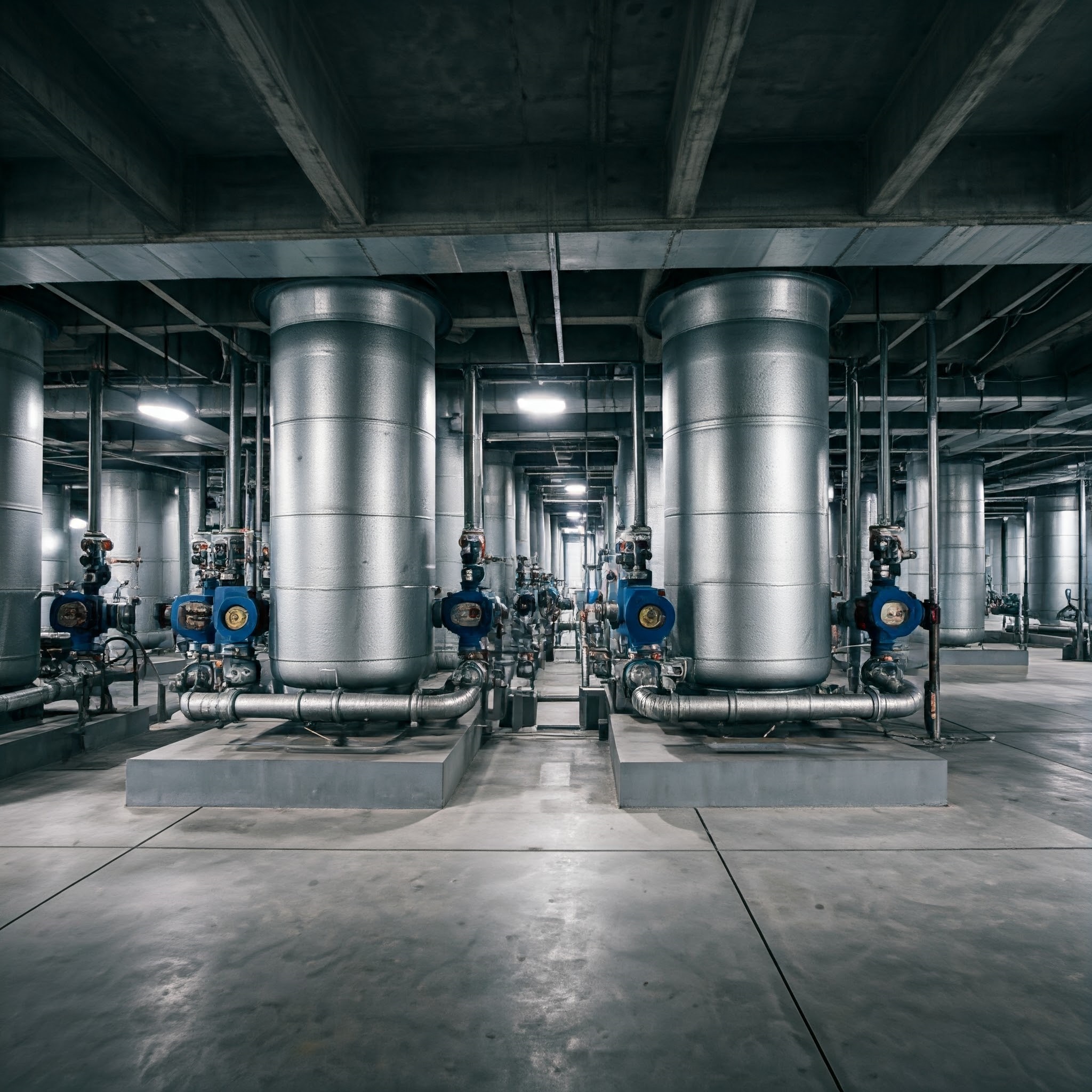
Walker says chilled water systems are generally the preferred HVAC system for heritage buildings, as the indoor humidity can be manipulated and controlled.
Walker reiterates the importance of collaboration between a facility manager and services contractor to avoid absolving responsibility to the maintenance contractor.
“A lot of the time we just leave it up to the maintenance contractor to solve problems but I think a collaborative approach is required, where our facility managers are interfacing with the maintenance team on site and providing feedback to their superior.”
Vender corroborates Walker’s belief in the responsibility of facility managers to educate the users of their spaces on IAQ. He posits the value of framing indoor air quality as an accessibility and inclusion issue, exemplified by the Safer Air Project report set to be released in November.
“In the same way we provide wheelchair ramps and other aids in public spaces for people who have a disability, we should ensure at least a minimum level of IAQ for people who are vulnerable to the adverse health impacts from poor air quality,” says Vender.
A powerful paradigm shift for hygiene
Walker says the rapid uptake of personal hygiene habits during the pandemic produced a powerful paradigm shift, as people realised the magnitude of exercising poor hygiene in public spaces.
“People now have an idea that things in the air can be harmful, and I think that’s a powerful paradigm shift,” he says.
Walker says six years ago, a request to cough into the crook of an elbow would have likely been met by mild bemusement. “We have moved on from complete obliviousness, but I think there’s still a way to go,” he says.
Vender reports that the lessons learned throughout COVID-19 regarding poor IAQ no longer remain front of mind. “Reminding people about the dangers of poor IAQ isn’t working,” he says. “We need to find new ways of communicating the issue.”
In developing solutions to mitigate the spread of infectious diseases, Vender urges focus beyond ventilation and air filtration, as the greatest danger is noted in harsh climate conditions. “Bushfires, rising temperatures and changes in humidity are all putting new stresses on our air handling systems,” he says.

Walker says six years ago, a request to cough into the crook of an elbow would have likely been met by mild bemusement. “We have moved on from complete obliviousness, but I think there’s still a way to go,” says Walker.
IAQ enriches an indoor space and the case for remaining sceptical
The importance of clean air is illustrated through a breakdown of standard daily consumptions. “We eat a kilo of food, drink two kilos of liquids, breathe in 15 kilos of air a day, and spend 90 percent of our time indoors,” says Walker.
He attributes a lack of guidelines for mould growth in public spaces as the reason for pitiful IAQ levels and persistent gaps in knowledge. “We don’t have a figure to quantify how much mould is too much and what happens if a building can’t achieve its CO2 targets.”
Workplaces that can confidently advertise optimum IAQ levels will find themselves in better stead when looking to attract people back into the office. “I know of a couple of facilities managers who have been improving HVAC and then using that as a selling point to get people back into the office because post-pandemic occupancy rates have been lower,” says Walker.
AIRAH applauds the rapid uptake of NABERS IEQ and the willingness of renowned global corporations to implement IAQ initiatives. “Amazon and Google have undertaken IAQ initiatives in their offices,” says Vender.
However, AIRAH advises remaining sceptical of false claims. “We are aware of many products on the market that make unverified claims about improving IAQ. Building owners and operators need reliable guidance,” adds Vender.

The importance of clean air is illustrated through a breakdown of standard daily consumptions. “We eat a kilo of food, drink two kilos of liquids, breathe in 15 kilos of air a day, and spend 90 percent of our time indoors,” says Walker.
Pushing forward a monolithic industry
Walker is inspired by the vast multidisciplinary efforts mobilised by the IAQ movement, as it remedies the major pandemic oversight of placing the burden on health.
“Scientists, people from building remediation, contractors, design consultants, and legislators are all working together – I think that’s really good, as that’s probably where we failed the most in the last pandemic,” he says.
Walker labels single-discipline solutions as inflexible and limited. “There are so many perspectives, and we’re going to get a very well-rounded solution if we use them, rather than just a viewpoint from one industry or one discipline.”
Vender is encouraged by the enthusiasm to slash embodied emissions and embrace electrification across a wide array of industries. He cites the possibilities and rewards of making buildings smarter and greener; however, the building and construction industry’s resistance to change is a challenge to overcome.
“There is a lot of inertia in the building and construction industry. The challenge is accelerating change,” says Vender.
UNSW study offers possible answer for desert city temperature control.


